


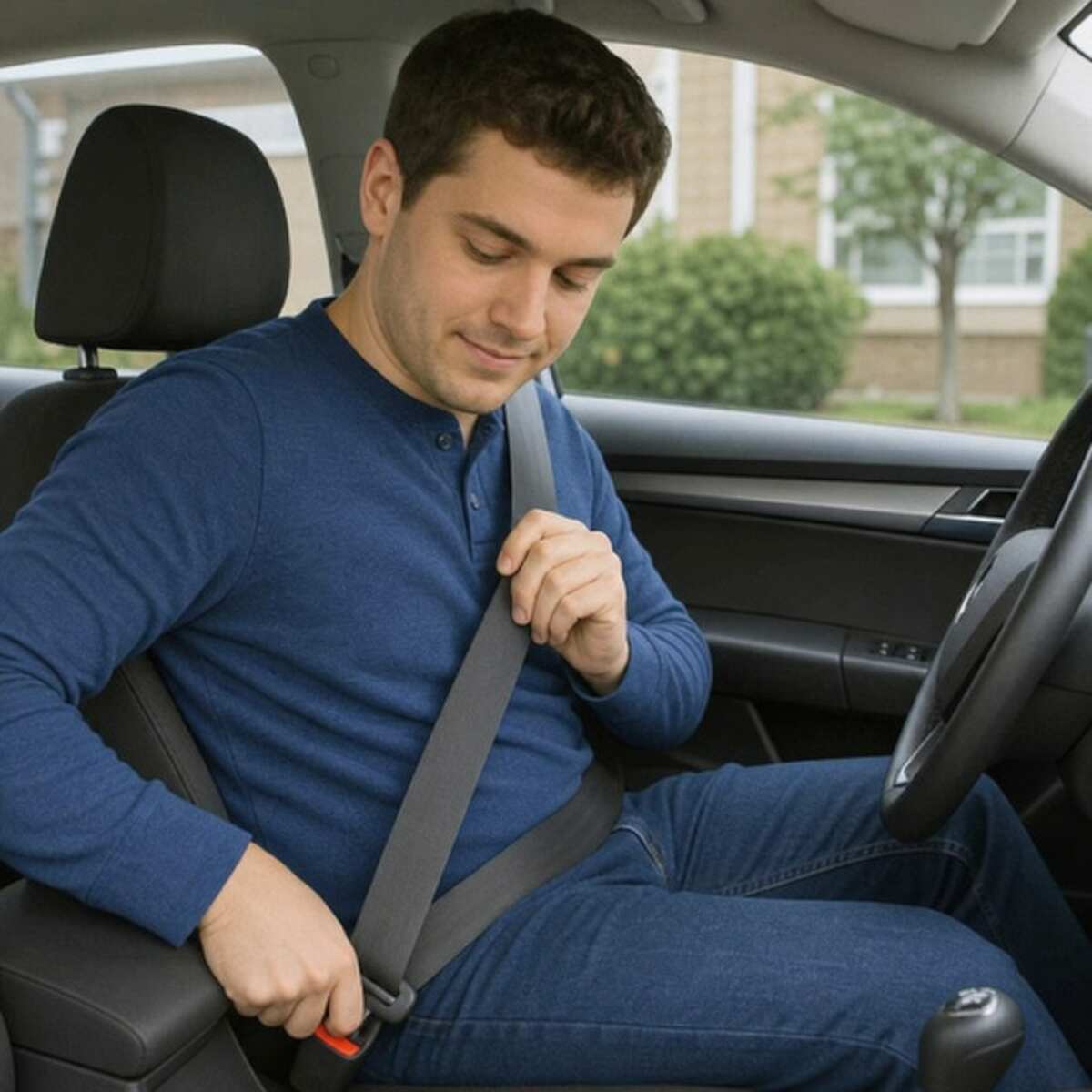
The simple “click” of a seat belt is one of the most familiar sounds you hear when getting into a car. It is a deeply ingrained habit for most drivers and passengers, designed to prevent catastrophic injuries in the event of a collision. However, despite decades of public awareness campaigns and clear evidence that seat belts save lives, thousands of drivers are penalized each year for failing to buckle up or for wearing their restraints incorrectly. To know more, check out https://www.trafficparalegalservices.com/seat-belt-tickets/
If you have been caught driving without proper restraints, or if you simply want to ensure you are fully compliant with the law to avoid costly penalties, you have come to the right place. Navigating the world of Ontario traffic tickets can be overwhelming, but understanding your rights, responsibilities, and the specific nuances of the law can empower you as a motorist.
In this comprehensive guide, we will explore everything you need to know about seat belt tickets Ontario residents frequently face. We will delve into the specific legislation, the financial and administrative penalties, driver responsibilities regarding younger passengers, legal exemptions, and strategies for dealing with a ticket if you are handed one.
Understanding the Legal Framework: Ontario Highway Traffic Act Section 106
To fully grasp how seat belt laws are enforced in the province, we must look at the legislation’s foundation. The rules governing seat belt use are clearly outlined in section 106 of the Ontario Highway Traffic Act.
This section of the law is uncompromising. It states that every person travelling in a motor vehicle on a highway must wear a seat belt assembly. Furthermore, the law dictates that the seat belt must be worn correctly. This means that simply having the belt loosely draped over you or tucked under your arm is not sufficient and can still result in a citation.
The “One Person, One Seat Belt” Rule
One of the most fundamental principles derived from Section 106 is the “one person, one seat belt” rule. In the past, it was not uncommon for people to cram into the back seat of a car, sharing belts or riding without them entirely. Today, it is strictly illegal to have more passengers in a vehicle than there are working seat belts. If your vehicle has five seat belts, you can only legally carry five people, including the driver.
The Definition of “Highway”
In the context of the Highway Traffic Act, the term “highway” does not just mean major expressways like the 401 or the QEW. Legally, “highway” refers to any common or public road, street, avenue, parkway, driveway, square, place, bridge, viaduct, or trestle designed and intended for, or used by, the general public for the passage of vehicles. Therefore, you are required to be buckled up the moment you enter a public roadway, regardless of the speed limit or the distance you are travelling.
The Cost of Non-Compliance: Fines and Demerit Points
When you are pulled over for a seat belt infraction, the immediate consequence is the financial penalty. Many drivers are surprised to learn that the amount written on the ticket is higher than the base fine set out in the legislation.
Breaking Down the Financial Penalty
The base set fine for a seat belt infraction in Ontario is generally $200. However, that is not the final amount you will be required to pay. The province applies additional surcharges to all provincial offences. When calculating the total fine including victim fine surcharge and mandatory court costs, the out-of-pocket expense for a seat belt ticket comes to $240.
The Victim Fine Surcharge (VFS) is a provincial fee added to all non-parking fines. The revenue collected from the VFS is deposited into a special fund to assist victims of crime. For a base fine of $200, the VFS is $35, and an additional $5 for court costs brings the grand total to $240.
Fine for Not Wearing a Seat Belt vs Improper Use
A common misconception among drivers is that there is a difference between the fine for not wearing a seat belt vs improper use. Under the law, they are treated with equal severity.
If you are wearing your shoulder strap tucked under your arm or behind your back, you are not using the safety device as intended by the manufacturer. Law enforcement officers can and will issue a ticket for improper use, and the penalty—both the financial cost and the demerit points—will be exactly the same as if you were not wearing the seat belt at all.
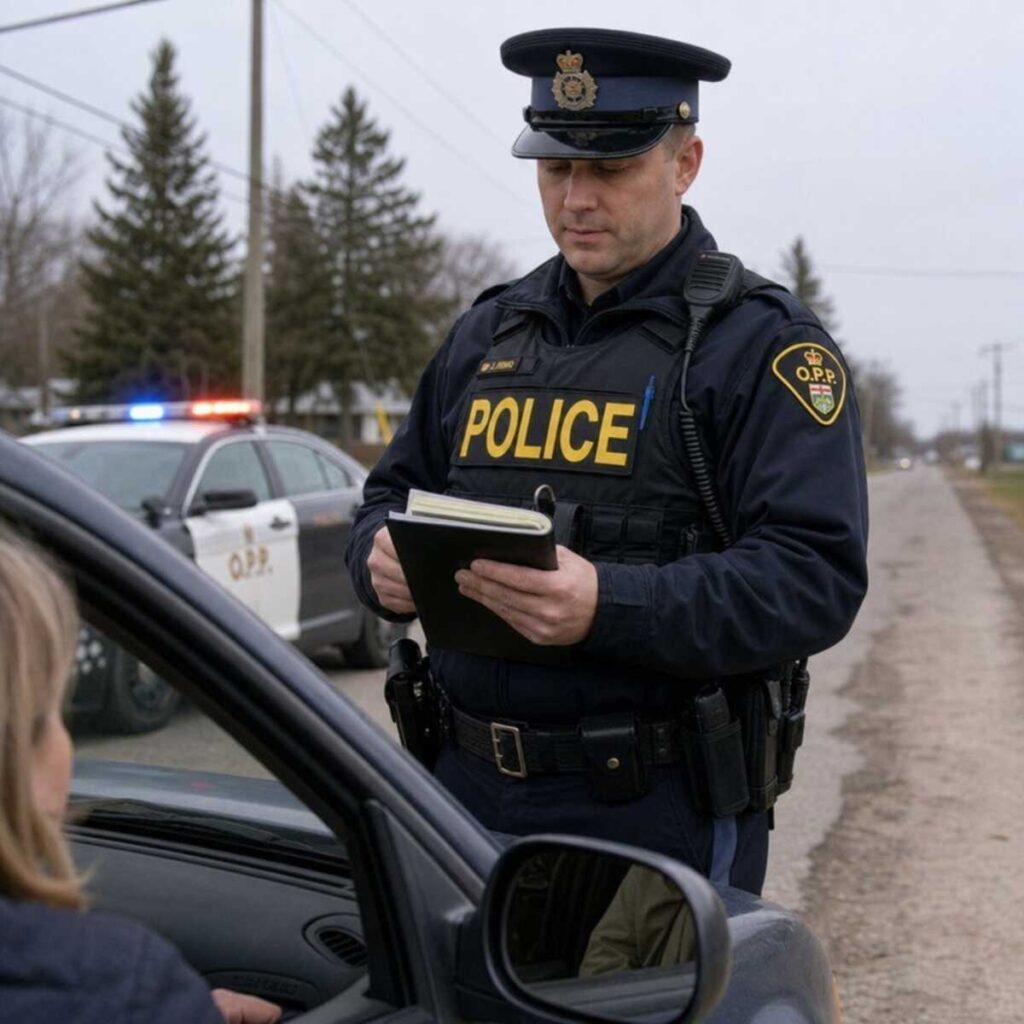
How Many Demerit Points for Seat Belt Violation?
Beyond the financial hit, the administrative penalty is what worries most drivers. So, exactly how many demerit points will be added to your license for a seat belt violation?
In Ontario, a conviction for a seat belt infraction results in the addition of two (2) demerit points to your driving record.
While two points might not seem like a large number compared to severe infractions like careless driving (which carries six points), they can add up quickly. If you are a fully licensed G driver and accumulate 15 demerit points, you will receive an automatic 30-day license suspension. However, as we will discuss later, the impact of these two points can be far more devastating for novice drivers.
Who Gets the Ticket? Driver vs. Passenger Responsibilities
When a police officer pulls a vehicle over and discovers that the occupants are unbuckled, a common question arises: who actually receives the ticket? The answer depends entirely on the unbuckled passenger’s age.
Adult Passengers (16 Years and Older)
In Ontario, any passenger who is 16 years of age or older is legally responsible for their own seat belt usage. If a 17-year-old or a 45-year-old passenger is caught not wearing a seat belt, the police officer will issue the $240 ticket directly to that passenger. The driver will not receive a ticket or demerit points for the adult passenger’s failure to buckle up.
Driver Responsibility for Passengers Under 16
The rules shift dramatically when it comes to minors. The law places strict responsibility on drivers for passengers under 16. If you are driving a vehicle and a 15-year-old passenger is not wearing their seat belt, you (the driver) will receive a ticket, a $240 fine, and two demerit points.
This law is designed to force drivers to take ultimate responsibility for the safety of children and young teens in their vehicle. Before putting the car in drive, it is the driver’s legal and moral obligation to physically verify that every passenger under the age of 16 is securely fastened in a seat belt or appropriate child car seat.
Protecting the Most Vulnerable: Child Car Seats and Boosters
When discussing seat belt laws, we must pay special attention to infants, toddlers, and young children. Standard vehicle seat belts are designed for adult bodies. For children, specialized restraints are legally required. The Ministry of Transportation child car seat regulations are highly specific and based on a child’s age, weight, and height.
Failing to properly secure a child in the correct car seat is treated as a seat belt infraction for the driver, resulting in the same $240 fine and two demerit points.
Phase 1: Rear-Facing Car Seats
Infants are exceptionally vulnerable in a collision because their heavy heads and developing neck muscles cannot withstand the forces of a crash.
- The Law: Infants must be secured in a rear-facing child car seat until they weigh at least 9 kg (20 lbs).
- Best Practice: Safety experts and the Ministry of Transportation recommend keeping children in a rear-facing seat for as long as possible, well beyond the minimum legal requirement, until they reach the maximum weight or height limits specified by the car seat manufacturer.
Phase 2: Forward-Facing Car Seats
Once a child has outgrown the rear-facing seat, they graduate to a forward-facing seat with a five-point harness.
- The Law: Children weighing between 9 kg and 18 kg (20 to 40 lbs) must be secured in a forward-facing child car seat. The seat must be properly anchored to the vehicle using the tether strap.
- Best Practice: Continue using the forward-facing seat with the internal harness until the child reaches the seat’s maximum weight or height limit.
Phase 3: Booster Seats
Booster seats do exactly what their name implies: they boost the child up so that the vehicle’s standard adult seat belt fits safely across their hips and collarbone, rather than their stomach and neck.
- The Law: Children must use a booster seat if they weigh between 18 kg and 36 kg (40 to 80 lbs), stand less than 145 cm (4 feet 9 inches) tall, and are under the age of 8.
- Graduation: A child can transition to a regular seat belt once they meet any one of the following criteria: they turn 8 years old, they reach a weight of 36 kg (80 lbs), OR they reach a height of 145 cm (4 feet 9 inches).
The Impact on Novice Drivers: G1 and G2 Restrictions
Ontario utilizes a Graduated Licensing System (GLS) designed to give new drivers time to practice and gain experience over time. Because novice drivers are still learning, they are subject to much stricter rules and lower demerit point thresholds. The G1 and G2 driver seat belt restrictions are heavily enforced.
The “Working Seat Belts” Condition
For both G1 and G2 drivers, the law mandates that you cannot carry more passengers than there are working seat belts in the vehicle. While this rule now applies to fully licensed drivers as well, a violation by a novice driver is treated as a breach of the specific conditions of their license.
The Danger of Demerit Points for Novice Drivers
While a fully licensed G driver faces a suspension at 15 points, novice drivers face severe penalties much earlier.
- If a G1 or G2 driver accumulates just 2 or more demerit points, they will receive a warning letter from the Ministry of Transportation.
- At 6 demerit points, a novice driver may be required to attend an interview to argue why their license should not be suspended.
- At 9 demerit points, a novice driver’s license is automatically suspended for 60 days.
Because a single seat belt ticket carries 2 demerit points, an unbuckled driver (or an unbuckled passenger under 16) immediately puts a G1 or G2 driver on the Ministry’s radar.
Furthermore, any violation of the specific conditions of a G1 or G2 license (such as carrying more passengers than seat belts) can result in an immediate 30-day license suspension for a first offence.
Long-Term Consequences: Insurance and Driving Records
Many drivers willingly pay the $240 fine just to make the ticket go away, unaware of the long-term hidden costs. The true financial sting of a traffic ticket is rarely the fine itself; it is the resulting increase in auto insurance premiums.
Seat Belt Ticket Impact on Insurance Rates
In the eyes of insurance companies, traffic tickets are categorized as minor, major, or serious (Criminal Code) convictions. A seat belt violation is classified as a minor conviction.
You might assume that a “minor” conviction wouldn’t severely impact your rates, but the impact of a seat belt ticket on insurance rates can be surprisingly costly. Depending on your insurance provider, your location, and your driving history, a single minor conviction can raise your insurance premiums by 10% to 20%.
If you already have another minor conviction on your record (such as a speeding ticket), a second minor conviction—like a seat belt ticket—can compound the effect, potentially raising your rates by up to 30% or causing you to lose your “conviction-free” discount. Over the years that the ticket remains on your record, the increased insurance premiums will far exceed the initial $240 fine.
Seat Belt Conviction on Driving Record Duration
If you are convicted of the offence—either by paying the fine, pleading guilty, or being found guilty in court—the conviction does not simply vanish after a few months.
The seat belt conviction on driving record duration is a standard three (3) years from the date of conviction (the date you paid the ticket or were found guilty in court), not the date you received the ticket. Insurance companies will be able to see this conviction and use it to calculate your premiums for those full three years.
Additionally, the two demerit points associated with the ticket will remain active on your driving record for two (2) years from the date of the offence.
Are There Any Exceptions? Legal Exemptions in Ontario
While the law is strict, the Ontario government recognizes that there are highly specific, rare scenarios where wearing a seat belt is impossible or impractical.
Medical Exemption for Wearing Seat Belts
Some individuals have physical or medical conditions that make wearing a seat belt severely painful or physically impossible. However, you cannot simply tell a police officer that you have a bad shoulder or a sensitive stomach.
To legally claim a medical exemption for wearing seat belts, you must possess a certificate issued by a qualified medical practitioner. This certificate must be in writing and clearly state that, in the medical practitioner’s professional opinion, you are unable to wear a seat belt assembly due to medical reasons or physical characteristics.
The certificate must include specific dates indicating how long the exemption is valid. If you are pulled over, you must present this valid medical certificate to the police officer immediately. If you do not have the certificate in the vehicle, you will be issued a ticket, regardless of your medical condition.
Taxi Driver Seat Belt Exemptions Ontario
The rules surrounding commercial transport, specifically taxis, are unique. The taxi driver seat belt exemptions Ontario outlines are often misunderstood.
A taxi driver is legally exempt from wearing a seat belt only when they are transporting a paying passenger for hire on a municipal road. The reasoning behind this historical exemption was rooted in driver safety; it allowed taxi drivers to quickly escape the vehicle if they were being assaulted or robbed by a passenger.
However, this exemption has strict limits. A taxi driver must wear a seat belt when:
- They are driving alone (no passengers).
- They are driving on a provincial highway (such as a 400-series highway), regardless of whether they have a passenger.
It is also vital to note that this exemption only applies to the driver. Passengers in a taxi are legally required to wear their seat belts at all times.
Other Notable Exemptions
There are a few other specific exemptions outlined in the Highway Traffic Act:
- Reversing: A driver may unbuckle their seat belt while operating the vehicle in reverse. This allows the driver to turn their body fully to check their blind spots. However, the belt must be re-fastened immediately before moving forward.
- Police and Peace Officers: Law enforcement officers are exempt from wearing seat belts while performing their duties (for example, when they need to exit a vehicle rapidly during an emergency response).
- Postal Workers and Delivery Drivers: Individuals who are actively engaged in work that requires them to exit and re-enter their vehicle at frequent intervals (such as delivering mail door-to-door) are exempt, provided the vehicle does not exceed 40 km/h between stops.
Safety First: Proper Way to Wear a Seat Belt Safety Guidelines
Avoiding a ticket is a great incentive, but the primary purpose of a seat belt is to save your life. Wearing a seat belt improperly not only risks a $240 fine but also drastically reduces its effectiveness in a crash, potentially causing severe internal injuries.
Following proper seat belt safety guidelines ensures that the structural integrity of your body (your bones) absorbs the force of a crash, rather than your soft tissues and internal organs.
The Lap Belt
The lap portion of the belt should rest low and snug securely across your pelvis and upper thighs—not across your stomach. In the event of a rapid deceleration, the pelvic bone is incredibly strong and can withstand the force of the belt. If the belt is over your stomach, the force of a crash can cause deep internal organ damage or spinal injuries.
The Shoulder Belt
The shoulder strap must pass diagonally across your chest and rest over the middle of your collarbone.
- Never tuck the shoulder belt under your arm. Doing so removes the upper body restraint, meaning your head and chest could violently strike the steering wheel or dashboard in a crash. It also focuses extreme force on your lower ribs, which can easily fracture and puncture your lungs.
- Never place the shoulder belt behind your back. This completely nullifies the upper-body protection and acts exactly as if you were not wearing the shoulder belt at all.
Guidelines for Pregnant Women
Pregnant women must continue to wear seat belts, as the greatest danger to a fetus is the mother being injured or ejected in a crash. The guidelines remain largely the same, with a crucial adjustment:
- The lap belt must be placed as low as possible, underneath the abdomen, resting flat against the upper thighs and pelvic bone. It should never rest across the belly.
- The shoulder strap should be placed between the breasts and off to the side of the belly.
What to Do If You Get a Ticket: Navigating Your Options
If you find yourself looking at the flashing red and blue lights in your rearview mirror and end up receiving a seat belt ticket, you have critical decisions to make. Once the officer hands you the yellow Offence Notice, you generally have 15 days to respond. If you ignore the ticket, you will automatically be convicted in absentia, the fine will go to collections, and your license could eventually be suspended for non-payment.
When you turn the ticket over, you will see three distinct options. Understanding how to handle Ontario traffic tickets can save you money, preserve your driving record, and keep your insurance rates low.
Option 1: Plea of Guilty (Voluntary Payment)
If you choose this option, you are admitting guilt. You simply sign the ticket and pay the $240 fine (online, by mail, or in person).
- The Catch: By paying the fine, the conviction is immediately recorded on your driving record for 3 years, and the 2 demerit points are applied. Your insurance company will likely see the conviction upon your policy renewal.
Option 2: Early Resolution Meeting
In many jurisdictions in Ontario, you can choose to meet with a municipal prosecutor before going to trial. Requesting an early resolution meeting for traffic violations is a common way to try and minimize the damage.
During an early resolution meeting, you or your legal representative will speak directly with the prosecutor. The prosecutor’s job is to secure convictions while managing court resources efficiently.
- What to Expect: In speeding cases, a prosecutor might offer to reduce the recorded speed to save you demerit points. However, seat belt tickets are absolute liability offences. You either wore it, or you didn’t. There are rarely “lesser” charges to plead down to.
- Potential Outcomes: The prosecutor might agree to lower the financial fine if you plead guilty, but the conviction and the demerit points will almost certainly remain. If you cannot reach an agreement, you still retain the right to proceed to trial.
Option 3: Trial Option
If you believe you were unjustly ticketed, or if you simply want to force the Crown to prove its case, you must select the trial option. This involves pleading not guilty and having your day in traffic court. How to Request a Trial for Provincial Offences
The process of how to request a trial for provincial offences has modernized in recent years. Depending on the municipality where you received the ticket (indicated at the top of your citation), you may be able to request a trial online through a municipal portal.
Alternatively, you must check Option 3 on the back of your ticket, fill out your contact information, and either mail it or deliver it in person to the specific Provincial Offences court office listed on the ticket.
Once your request is processed, the court will mail you a Notice of Trial that states the date, time, and location (or virtual link) of your court appearance. Because courts are heavily backlogged, it is not uncommon for a trial date to be scheduled 8 to 12 months after the offence occurred.
Strategy: Fighting a Seat Belt Ticket in Court
Deciding to go to trial means you will be entering the legal arena. Fighting a seat belt ticket in court is notoriously difficult because, as mentioned, it is a strict liability offence. The prosecutor simply has to prove beyond a reasonable doubt that you were operating a vehicle on a highway without wearing a complete seat belt assembly. They do not have to prove that you intended to break the law.
Despite the difficulty, many drivers successfully defend themselves or hire paralegals to do it for them. Here are the core elements of fighting a ticket.
Requesting Disclosure
Before your trial, you have the absolute constitutional right to know the evidence the prosecution has against you. This is called “disclosure.” You must actively request disclosure from the prosecutor’s office well in advance of your trial date.
Disclosure typically includes the police officer’s handwritten notes from the traffic stop. Reviewing these notes is crucial. Does the officer explicitly state they saw you without a seat belt? From what distance? What were the weather and lighting conditions? If the officer’s notes are vague or incomplete, it introduces reasonable doubt.
Common (and Unsuccessful) Defences
When fighting a seat belt ticket, it is important to know what won’t work.
- “I just unbuckled to grab my wallet for the officer.” (The officer will testify they saw you unbuckled while the vehicle was in motion).
- “I was only driving two blocks to the grocery store.” (The law applies the moment you enter a highway).
- “I forgot.” (Lack of intent is not a defence for strict liability offences).
Valid Legal Defences
To successfully fight the ticket, you must introduce reasonable doubt to the officer’s observations or prove a legal exemption.
- Obstructed View: If the officer was parked far away, in the dark, or if your vehicle has darkly tinted windows, your defence might center around the fact that the officer could not have possibly seen whether you were wearing a black seat belt against a dark jacket.
- The Officer Fails to Show Up: If the police officer who issued the ticket does not attend the trial, the prosecution generally cannot prove their case. Without the officer’s testimony, the Justice of the Peace will likely dismiss the charge.
- Proving an Exemption: If you had a valid medical certificate but forgot to present it to the officer (which is a technical violation in itself), bringing the valid, dated certificate to court and showing it to the prosecutor may sometimes result in the charge being withdrawn in the interest of justice.
Should You Hire Legal Representation?
Because the seat belt ticket impact on insurance rates can cost thousands of dollars over three years, many drivers opt to hire specialized traffic ticket paralegals.
Paralegals know the specific procedures, how to cross-examine police officers, and how to spot fatal flaws in the prosecution’s disclosure. While hiring representation costs money upfront, it can be a sound investment if it prevents a conviction from destroying your clean driving record.
Beyond the Ticket: The Broader Landscape of Traffic Safety
To truly appreciate why Ontario’s laws are so strict, it helps to zoom out and look at the broader picture of road safety in the province. Seat belt enforcement is a cornerstone of the Ministry of Transportation’s strategy to reduce fatalities.
According to provincial statistics, roughly one in five motor vehicle occupants killed on Ontario’s roads were unbuckled at the time of the collision. This is a staggering statistic when you consider that over 90% of Ontarians boast compliance with seat belt laws. It demonstrates that the small minority of people who choose not to buckle up make up a vastly disproportionate number of road fatalities.
Comparing Seat Belts to Other Ontario Traffic Tickets
When evaluating Ontario traffic tickets, seat belt violations sit in a unique category.
- Speeding: Often seen as a lapse in judgment or lack of attention. Fines scale with speed.
- Distracted Driving: Currently one of the most heavily penalized infractions in the province (carrying massive fines, 3 demerit points, and mandatory license suspensions).
- Seat Belts: Unique because the infraction does not necessarily cause the accident (like speeding or texting might), but it guarantees severe injury if an accident occurs. The law takes proactive measures to mitigate physical damage.
Practical Tips for Ensuring Everyday Compliance
Avoiding a $240 fine and three years of elevated insurance premiums is straightforward if you build foolproof habits. Here are practical tips to ensure you never have to worry about a seat belt ticket:
- The “No Drive” Rule: Establish an uncompromising rule in your vehicle. The car does not shift out of ‘Park’ until every single passenger is audibly buckled in. Do not rely on your mirrors; visually confirm that everyone, especially children, is secured.
- Check Child Seats Periodically: As children grow, their car seat needs change. Routinely check their height and weight against the Ministry of Transportation child car seat regulations to ensure they haven’t outgrown their current seat. Furthermore, check the expiration date on the car seat itself, as plastics degrade over time.
- Inspect Your Belts: Seat belts are subject to wear and tear. Periodically pull the belts all the way out to check for fraying, cuts, or UV damage. Ensure the latch clicks securely and the retractor pulls the belt back snugly against your chest. A malfunctioning seat belt can lead to an “improper use” ticket.
- Educate Teen Drivers: If you have a G1 or G2 driver in your household, drill into them the absolute necessity of seat belts. Explain the G1 and G2 driver seat belt restrictions, and ensure they understand that a single unbuckled friend could result in their newly acquired license being suspended.
- Dress for Safety: During brutal Ontario winters, bulky puffy jackets can prevent a seat belt from sitting snugly against the body, especially for children in car seats. Compress the jacket or remove it entirely before buckling up, then place a blanket over the child for warmth.
Conclusion: The Ultimate Takeaway
Navigating the complexities of the Highway Traffic Act can be daunting, but the core message regarding seat restraints remains incredibly simple. Understanding the nuances of seat belt ticket laws in Ontario isn’t just about outsmarting the system or beating a fine in court; it is about recognising the immense physical and financial risks associated with non-compliance.
From the uncompromising rules of Ontario Highway Traffic Act section 106 to the harsh reality of a seat belt conviction on a driving record lasting three years, the province makes it abundantly clear that buckling up is non-negotiable. Whether you are driving to the corner store or embarking on a cross-provincial road trip, ensuring that you and your passengers are properly restrained is your absolute duty as a motorist.
If you do find yourself on the receiving end of a ticket, remember that you have options. Assess the total fine including victim fine surcharge, consider the long-term seat belt ticket impact on insurance rates, and decide whether utilizing an early resolution meeting for traffic violations or fighting a seat belt ticket in court is the best path forward for your specific situation.
Ultimately, the best defense against traffic fines, soaring insurance premiums, and catastrophic injuries is a proactive one. Take the extra two seconds before every journey. Listen for that vital “click.” It protects your wallet, your driving privilege, and most importantly, your life. Stay safe, stay informed, and always buckle up on Ontario’s roads.
