


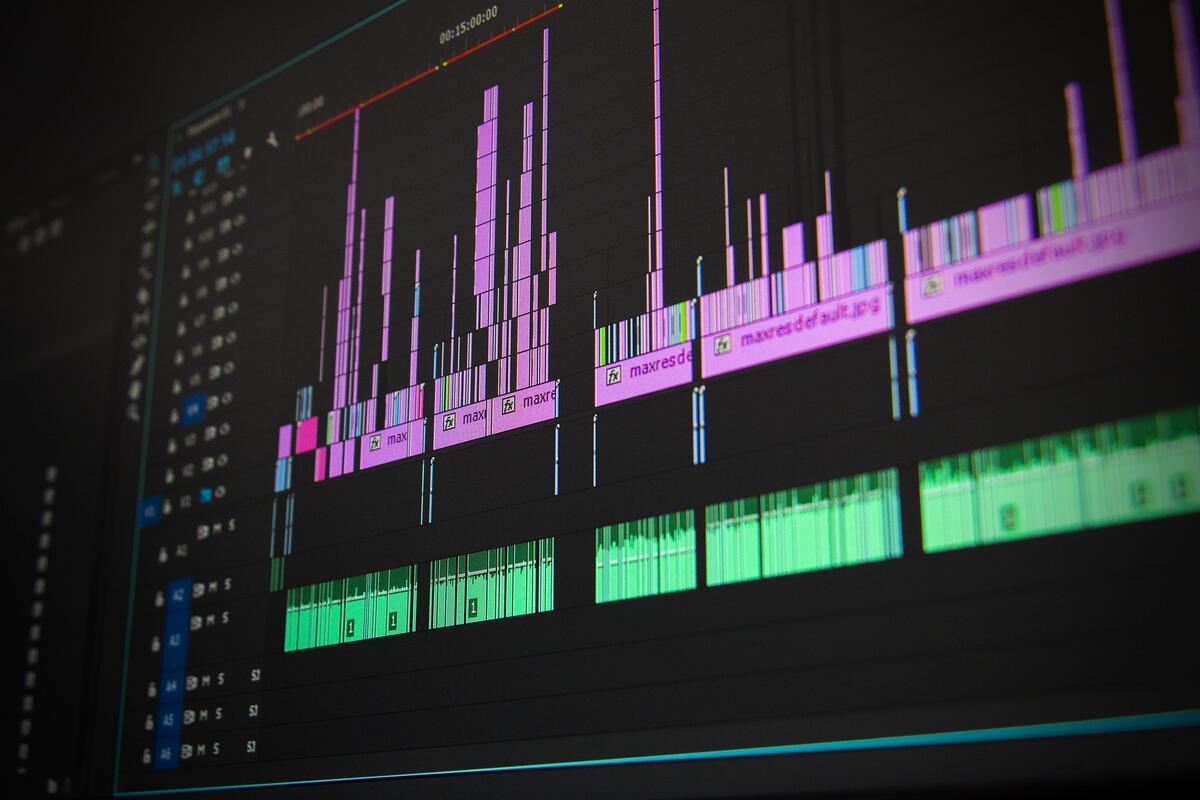
The best audio to video converters of 2026 do far more than slap a static image behind your MP3. Here are the ten platforms that actually move the needle for creators and marketers.
Turning audio into video used to mean dragging a waveform image into a timeline and calling it done. In 2026, that is no longer good enough. Audiences expect motion, visual sync, and production quality, even for podcast clips, voiceover reels, and music visualizers posted to social platforms.
The tools on this list go well beyond the old static-image approach. Some generate AI video that reacts to the sound itself. Others pair audio with talking avatars, lip-synced faces, or AI-generated b-roll. A few cover the entire creative pipeline from audio upload to finished, downloadable video, with no desktop software required.
I tested each tool over two weeks across different use cases: podcast clipping, music visualization, voice-to-video for social content, and narration-driven marketing video. The result is this guide.
I guarantee at least one of these tools fits your workflow exactly. Whether you need a fast, free converter for a single project or a scalable platform for weekly video production, the right option is here.
The 10 Best Audio to Video Converters at a Glance
| Tool | Best For | Free Plan | AI Video Generation | Platforms |
| Magic Hour | Creators: full AI audio-to-video pipeline | Yes (no signup) | Yes | Web, API |
| VEED | Editing-first teams with conversion needs | Yes (watermarked) | Yes | Web |
| Kapwing | Collaborative social media teams | Yes | Limited | Web |
| Canva | Design teams repurposing audio assets | Yes | Limited | Web, Mobile |
| CapCut | Short-form social and TikTok creators | Yes | Yes | Web, Mobile, Desktop |
| Fliki | Voiceover-led content with stock visuals | Yes | Yes | Web |
| Lumen5 | Blog-to-video and content repurposing | Yes | Limited | Web |
| Descript | Podcasters editing audio-video by transcript | Yes | Limited | Web, Mac, Windows |
| Clideo | Simple file conversion with no learning curve | Yes (watermarked) | No | Web |
| Adobe Express | Design-forward creators in the Adobe ecosystem | Yes | Limited | Web, Mobile |
1. Magic Hour
Magic Hour is the most advanced AI-powered option on this list for anyone who wants to convert audio to video online free and get an output that actually looks like AI-generated video, not just audio sitting behind a static image.
Upload your audio file, add an optional starting image and a text prompt describing the visual you want, and Magic Hour generates synced video from the sound itself. No signup is required to try it. The tool processes spoken word, music, ambient sound, and narration, producing visuals that respond to the audio content.
What separates Magic Hour from every other tool on this list is the surrounding platform. After generating your audio-to-video output, you can immediately pipe it through lip sync, face swap, talking photo, image upscaling, or video-to-video transformation, all within the same session and the same credit balance. For creators who want a complete post-production workflow rather than a single conversion step, nothing in this price range comes close.
Pros:
- Generates an AI video that reacts to audio content, not just static visuals behind audio
- No signup required to try; credits never expire
- Optional starting image plus text prompt for precise visual direction
- One-click multi-step workflows (generate, upscale, export video) in one session
- Access to frontier AI models across video, image, and audio tools
- Best-in-class lip sync, face swap, and talking photo tools available on the same platform
- Parallel generations with no concurrency cap
- Full API parity across all tools for developer integration
- Generous free tier with 400 credits and no credit card required
- Optimized for both desktop and mobile
- Weekly feature releases and founder-level support responses
- Reliable at scale, including live activations and traffic spikes
- Click-to-create templates for fast variations and multiple takes
- Trusted by teams at Meta, NBA, L’Oreal, Shopify, Cisco, and Dyson
Cons:
- Not a traditional file-format converter (not designed for MP3-to-MP4 batch processing)
- AI video generation requires credits; high-volume output costs scale accordingly
- Learning the full platform takes time for users who only need basic conversion
If you want an audio-to-video tool that produces genuinely creative AI output rather than a decorated audio file, Magic Hour is the clear choice. It is the only platform where you can go from a raw audio clip to a finished, upscaled, lip-synced video without using a single additional tool.
Pricing:
- Free: 400 credits, no credit card required, no signup to try
- Creator: $15/month or $10/month billed annually ($120/year)
- Pro: $39/month
- Business: $99/month
- Credits never expire on all plans
2. VEED
VEED is the strongest all-purpose online video editor that includes audio-to-video conversion as a native feature. Upload an MP3, WAV, or AAC file and VEED wraps it in a clean video frame, lets you add images, captions, waveform animations, and stock footage, then exports to MP4.
The free plan adds a watermark, but the overall editing workflow is one of the most polished in the browser-based category. Auto-subtitles in 100+ languages, background removal, and a multi-track timeline make VEED far more useful than a pure conversion tool.
Pros:
- Full timeline editor alongside conversion capability
- Auto-subtitles in 100+ languages
- Clean, polished interface with fast workflow
- Waveform animation, image overlay, and stock footage options
- Strong for podcast clips, social content, and quick marketing videos
Cons:
- Free plan exports carry a watermark
- AI avatar and talking-head features are less capable than dedicated platforms
- Not designed for an AI-generated video that reacts to audio
- Enterprise governance features are limited compared to Synthesia or Colossyan
VEED is the right pick if you need a real editor alongside your audio-to-video workflow. The conversion feature is fast and clean, and the surrounding tools cover most of what social media teams need day to day.
Pricing:
- Free plan available (watermarked exports)
- Basic: $18/month
- Pro: $30/month
- Business: $59/month
3. Kapwing
Kapwing is built for collaborative social media teams who need fast, browser-based editing with real-time teamwork. Its audio-to-video workflow is straightforward: upload audio, add images or video clips, sync the timeline, and export.
The free tier allows watermark-free exports for projects with certain resolution and duration limits, making it genuinely useful for individual creators without the typical paywall friction.
Pros:
- Real-time collaboration; multiple editors on the same project simultaneously
- Watermark-free exports on the free tier within limits
- Fast, intuitive interface with low learning curve
- Good subtitle and captioning tools
- Strong for meme-style content, social clips, and team projects
Cons:
- AI video generation from audio is limited; primarily a traditional editor
- Less suitable for long-form content or production-grade output
- No talking avatar or AI presenter features
- Free plan has resolution and duration caps
Kapwing earns its place if your team edits social video together and values collaboration speed over advanced AI features. The real-time editing workflow is the strongest on this list for team use cases.
Pricing:
- Free plan available (watermark-free within limits)
- Pro: $24/month
- Team and Business: higher tiers available
4. Canva
Canva’s audio-to-video converter is the fastest entry point for design teams already working inside the Canva ecosystem. Upload an MP3, choose a background image or animated template, and Canva outputs a video ready for download or social publishing in under two minutes.
It is not a deep editing tool, but for brand teams that live in Canva for graphics and want to extend that workflow to audio-backed video, it requires zero additional learning.
Pros:
- Zero learning curve for existing Canva users
- Drag-and-drop interface with brand kit integration
- Good royalty-free music library and design templates
- Free plan available with watermark-free exports for basic use
- Canva Pro unlocks premium animations and brand consistency features
Cons:
- Not suitable for complex audio-video sync or AI-generated visuals
- Limited multi-track editing capability
- No AI video generation from audio; purely a design-layer approach
- Output quality is template-driven, not production-customizable
If your team already uses Canva for marketing design and needs audio-backed social videos with brand consistency, this is the path of least resistance. It handles the job without adding a new tool to the stack.
Pricing:
- Free plan available
- Canva Pro: $13/month (or $120/year)
- Teams: $10/person/month (minimum 5 people)
5. CapCut
CapCut is the most feature-rich free option on this list for short-form social creators. Originally built for TikTok content, it has evolved into a capable multi-platform editor available on web, desktop, and mobile. Audio-to-video conversion is one of dozens of tools, and the surrounding editing features are unusually strong for a free product.
Auto-captions, AI background removal, speed ramping, and trend-driven templates make CapCut the default choice for creators producing high-volume content for Reels, Shorts, and TikTok.
Pros:
- Free with no watermark on standard exports
- Available on web, desktop (Mac and Windows), and mobile (iOS and Android)
- Strong AI editing tools: captions, background removal, text-to-speech
- Large library of trending templates and effects
- Fast workflow optimized for short-form social formats
Cons:
- Owned by ByteDance; data privacy concerns for some enterprise users
- Not suitable for long-form or professional production workflows
- AI audio-to-video generation is less advanced than Magic Hour
- Not designed for team collaboration at scale
CapCut is the strongest free tool for solo creators producing short-form social content who need advanced editing alongside audio-to-video capability. The ByteDance ownership is worth noting for any team with enterprise data policies.
Pricing:
- Free plan with no watermark
- Pro: $7.99/month
6. Fliki
Fliki is purpose-built for voiceover-led content creation. It lets you create videos from text scripts, audio narration, or audio files, pairing your audio with AI-selected stock visuals, B-roll footage, and animated scenes.
For solo creators producing explainer videos, course content, or narrated social posts without a camera setup, Fliki covers the full workflow from audio to finished video.
Pros:
- Voiceover-to-video workflow is the core product, not an add-on
- Good stock visual library for B-roll and scene matching
- Text-to-speech and audio upload both supported
- Decent free tier for testing
Cons:
- AI-generated visuals are stock-based, not AI-reactive to audio content
- Less suitable for music visualization or non-narration audio
- Limited editing depth compared to VEED or Kapwing
- Fewer languages than VEED or Canva at higher tiers
Fliki is the right pick if you produce narration-driven content like tutorials, explainers, or educational videos and want the platform to handle visual selection automatically rather than manually assembling a timeline.
Pricing:
- Free plan available
- Standard: $28/month
- Premium: $88/month
7. Lumen5
Lumen5 is the go-to tool for marketing teams converting written content into social video. Its audio-to-video functionality sits inside a broader text-and-media-to-video workflow. You can upload audio narration or use its text-based editor to drive scene selection from blog posts and articles.
It is fast, requires no video-editing experience, and produces clean social-format output, though its AI features are less advanced than those of Magic Hour or Fliki.
Pros:
- Blog-to-video and text-to-video workflow is the primary strength
- No video editing experience required
- Clean template library for social content
- Good for repurposing written content at volume
Cons:
- Audio-to-video is not a primary feature; limited compared to dedicated tools
- Output relies heavily on templates; limited creative flexibility
- Not suitable for music visualization, AI avatar, or reactive video
- No talking-head or face-based video output
Lumen5 fits teams with a backlog of written content they want to convert into social video quickly. If your audio is scripted narration and you want the platform to match visuals to your script automatically, this workflow is efficient.
Pricing:
- Free plan available
- Starter: $29/month
- Professional: $79/month
- Business: $199/month
8. Descript
Descript takes a fundamentally different approach to audio-to-video creation. Rather than uploading audio and selecting visuals, you edit your audio and video by editing the transcript. Change a word in the text, and the media updates to match.
For podcasters and interview-based content creators who produce audio first and need to turn recordings into polished video content, Descript saves more production time than any other tool on this list.
Pros:
- Edit audio and video by editing the transcript (genuinely unique)
- Overdub feature replaces words in recordings using your cloned voice
- Screen recording, Studio Sound noise removal, and video editing in one app
- Strong for podcast repurposing: clip creation, audiogram generation, and social cuts
Cons:
- Not a visual audio-to-video generator; requires existing video or screen recording alongside audio
- High learning curve compared to one-step converters
- Not suitable for music visualization or AI-reactive video generation
- Overdub quality is good, but below Magic Hour or ElevenLabs for pure voice synthesis
Descript belongs on this list for any creator who regularly produces recorded audio content and wants to repurpose it into video. The transcript-based editing workflow is uniquely efficient for that specific use case.
Pricing:
- Free: 1 hour of media
- Creator: $24/month
- Business: $33/month
9. Clideo
Clideo is the simplest tool on this list. Upload an audio file, select a background image or color, and download an MP4. No AI, no timeline editor, no learning curve.
It is the right choice for anyone who needs a quick MP3-to-MP4 conversion for a one-off project and requires nothing beyond a clean output file.
Pros:
- Fastest, simplest workflow on this list
- Works in any browser with no setup
- Supports a wide range of audio and video file formats
- Good for basic MP3-to-MP4 batch conversion
Cons:
- Free plan exports carry a watermark
- No AI video generation, talking avatars, or visual syncing
- No editing tools beyond basic trim and background selection
- Not suitable for production-quality or social content
Clideo is a utility, not a creative platform. If the task is purely file format conversion and you need it done in 30 seconds, it delivers. For anything more creative, choose a different tool.
Pricing:
- Free plan available (watermarked)
- Basic: $6/month
- Unlimited: $16/month
10. Adobe Express
Adobe Express brings the polish of the Adobe ecosystem to a simplified browser-based editor. Its audio-to-video workflow is clean and brand-consistent: upload audio, choose a template or background, add text and design elements, and export.
For teams already using Adobe Creative Cloud who need occasional audio-backed social video without opening Premiere Pro, Express bridges the gap.
Pros:
- Tight integration with Adobe Creative Cloud assets and brand kits
- Clean, polished interface with professional template library
- Free plan includes commercial use rights
- Strong for design-forward, brand-consistent social content
Cons:
- No AI video generation from audio; design-layer approach only
- Limited timeline editing compared to VEED or Kapwing
- Not suitable for music visualization or talking-avatar workflows
- Premium assets locked behind paid Creative Cloud subscription
Adobe Express is the right choice if your team uses Creative Cloud and needs a simplified path to audio-backed social video without the full Premiere Pro workflow. It is a design-forward bridge, not an AI video tool.
Pricing:
- Free plan available (commercial use rights included)
- Adobe Express Premium: $9.99/month
- Included in Creative Cloud All Apps: $54.99/month
How We Chose These Tools
I evaluated each tool across five criteria over two weeks of hands-on testing:
- Conversion quality: Does the output look like a finished video or a decorated audio file? Does it hold up for social and marketing use?
- AI capability: Can the tool generate AI visuals that respond to the audio content, or does it only support manual image placement?
- Workflow integration: Can you go from audio upload to finished video without switching tools or exporting intermediate files?
- Free tier accessibility: Is there a meaningful free option that lets you evaluate the tool before committing?
- Ease of use: How long does it take to produce your first output? Is the interface intuitive for non-technical users?
Every tool was tested using the same 60-second voiceover audio clip and the same 90-second instrumental music track. Results were evaluated for visual quality, sync accuracy, and time-to-first-export.
The Market Landscape: What Is Changing in 2026
Audio-to-video is splitting into two distinct categories, and the gap between them is widening.
The first category is traditional conversion: upload audio, attach a static image, and export an MP4. Tools like Clideo, Canva, and early versions of Kapwing live here. These tools solve a basic problem quickly. But their outputs are increasingly indistinguishable from each other, and AI platforms are making their outputs look dated by comparison.
The second category is AI-reactive video generation from audio: the platform interprets the audio content and generates a video that responds to it, producing motion, scene changes, and visual mood that align with the sound itself. Magic Hour represents the leading edge of this approach in 2026. The output from an AI-reactive tool and a static-image converter are not comparable products.
Three trends are defining the category:
Reactive AI is the new baseline. Generative AI models trained on audio-visual pairs can now produce videos that interpret audio semantically, not just temporally. Tools that cannot do this will increasingly need to justify their place in a creator’s workflow.
Platform consolidation is accelerating. The most-used tools on this list are not standalone audio-to-video converters. They are full creative platforms that include conversion as one of many features. The standalone converter is a utility; the integrated platform is the workflow.
Short-form social has set the quality bar. TikTok, Instagram Reels, and YouTube Shorts have trained audiences to expect motion, captions, and visual dynamism in even the shortest clips. Static image-backed audio is losing engagement across every platform. This expectation is accelerating the shift from conversion tools to generation tools.
One emerging approach worth watching: tools that use audio fingerprinting to auto-select and sync stock footage or AI-generated scenes to specific audio segments, rather than requiring the creator to choose visuals manually. Several platforms are developing this, and it will significantly change the category over the next 12 months.
Final Takeaway: Which Tool Is Right for You?
If you want AI-generated video that actually reacts to your audio content: Magic Hour. Upload audio, add a prompt, and generate reactive AI video with full access to lip sync, face swap, and talking photo tools in the same session.
If you need a full timeline editor with audio-to-video as one feature: VEED. The strongest editing workflow on this list, alongside solid conversion capability.
If your team collaborates on social video in real time: Kapwing. Real-time multi-editor collaboration is uniquely strong here.
If you already use Canva for marketing design: Canva’s audio-to-video converter requires zero new learning and keeps your brand assets in one place.
If you produce TikTok, Reels, or Shorts and want the most capable free tool: CapCut. No watermark, strong AI editing, available across every device.
If you produce narration-driven educational or explainer content: Fliki. Voiceover-to-video is the core product, and the visual selection workflow is fast.
If you edit podcast audio and want to repurpose recordings into video: Descript. The transcript-based editing workflow is uniquely efficient for this specific use case.
If you just need a quick format conversion with no creative ambition: Clideo. Fastest tool, simplest workflow, done in under a minute.
The honest advice: test two or three of these against your actual audio content before committing to a plan. A tool that looks impressive with a demo file does not always perform the same with your specific audio characteristics, length, or visual requirements. Most tools here offer a free tier. Use it.
Frequently Asked Questions
What is the best free audio to video converter online in 2026?
Magic Hour offers the strongest free tier for AI-generated audio-to-video output, with 400 free credits and no signup required to try. CapCut is the best free traditional editor with no watermark. VEED and Canva also offer free plans. For pure format conversion, Clideo offers a basic free tier.
Can I convert audio to video without adding a background image?
Yes. Most tools on this list allow you to use a solid color, animated waveform, or AI-generated visual as the background rather than requiring a static image. Magic Hour generates AI video from audio without any background image required.
How long does it take to convert audio to video online?
For simple conversion tools like Clideo or Canva, under 60 seconds. For AI-reactive video generation tools like Magic Hour, typically 30 seconds to 3 minutes depending on audio length and generation settings. VEED and Kapwing fall in between at one to two minutes for typical social clips.
Will my converted video have a watermark?
It depends on the tool and plan. Magic Hour’s free tier does not require a credit card and generates outputs on a credit basis. VEED, Clideo, and some Canva exports include watermarks on free plans. CapCut’s free plan produces watermark-free exports for standard use. Always check the specific free plan terms before assuming watermark-free output.
Can I use these tools to convert podcasts and music tracks, not just voiceover?
Yes. All tools on this list support music and podcast audio. Magic Hour is particularly strong for music visualization because it generates AI video that responds to the audio content rather than simply placing music behind a static image. CapCut and VEED both support music-backed video with waveform animations and visual effects.
