


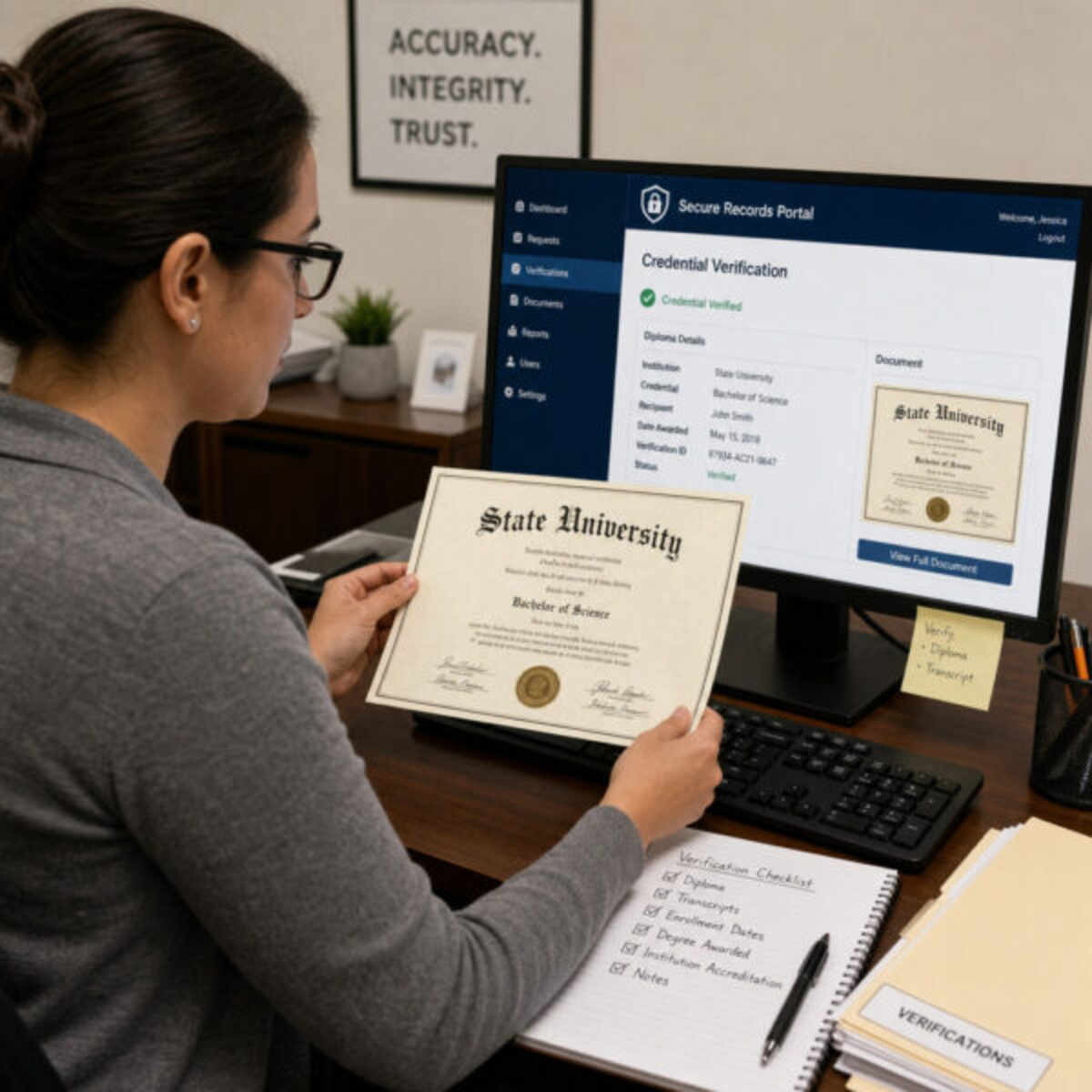
Verify Academic Credentials With Confidence, Care, and Compliance
A diploma is more than paper. It represents years of study, institutional trust, professional eligibility, and a candidate’s claim to a specific educational achievement. When that claim affects hiring, licensing, admissions, background screening, or internal compliance, guessing is not good enough. Read the Best info about làm bằng đại học uy tín.
Our diploma and credential verification service helps organizations confirm whether a degree, diploma, certificate, or attendance record can be validated through legitimate channels. We work from the principle that genuine university diplomas are verified by the issuing institution or an authorized verification source—not by appearance alone.
If you need a fast, documented, privacy-conscious way to verify academic credentials, we make the process clear from the first request to the final report.
Request a verification today and give your team the evidence it needs to make decisions with confidence.
Request Diploma Verification See Required Information View Pricing Placeholders
Built for Ethical Credential Verification, Not Guesswork
Fraudulent credentials can create serious risk. A false diploma may affect workplace safety, professional licensing, immigration documentation, salary decisions, admissions eligibility, or public trust. At the same time, legitimate graduates deserve a fair, respectful process that protects their privacy and avoids unnecessary suspicion.
That is the balance our service is designed to support.
We help employers, universities, screening firms, licensing teams, professional associations, scholarship administrators, and compliance departments verify the authenticity of diplomas through ethical, documented methods. Our approach focuses on direct confirmation, registrar-approved processes, authorized databases, consent-based requests, and careful review of available documentation.
We do not provide services that assist in creating, altering, imitating, or counterfeiting diplomas. We do not provide templates, production techniques, seal replication guidance, or instructions that could be used to manufacture fake academic documents. Our work is anti-fraud, privacy-aware, and aligned with legitimate verification needs.
Who This Service Is For
Our verification process is ideal for organizations and individuals who need a reliable answer to a simple but important question: Can this academic credential be legitimately confirmed?
Common use cases include:
- Employers and HR teams verifying degrees before hiring, promotion, or compensation decisions
- Background screening companies adding academic verification to candidate reports
- Universities and admissions offices reviewing prior academic history for enrollment or transfer evaluation
- Professional licensing boards confirming minimum education requirements
- Government contractors and regulated employers documenting due diligence
- Credential evaluators reviewing domestic or international education records
- Scholarship and fellowship programs confirming eligibility
- Legal and compliance teams investigating disputed credentials
- Individuals who want to confirm that their own records are accurate before submitting them to an employer, university, or agency
If your decision depends on whether a claimed degree is real, we help you move from assumption to documented verification.
What You Receive
Every verification request is handled as a formal credential review. Depending on the institution, jurisdiction, available records, and consent requirements, your final result may include:
- Confirmation of whether the institution can verify the credential
- Degree or diploma title, when released by the institution or authorized source
- Field of study, major, or program, when available
- Dates of attendance or graduation date, when released
- Honors or distinctions, when available and relevant
- Name match review based on the information provided
- Notes on discrepancies, incomplete records, or unavailable data
- Verification source used, such as registrar response, authorized clearinghouse, or approved institutional process
- Timestamped completion record
- Summary report suitable for internal compliance files
Where records are restricted, archived, incomplete, or subject to privacy controls, we explain what can and cannot be confirmed. A responsible verification report should be clear—not inflated, vague, or overconfident.
Why Appearance Alone Is Not Enough
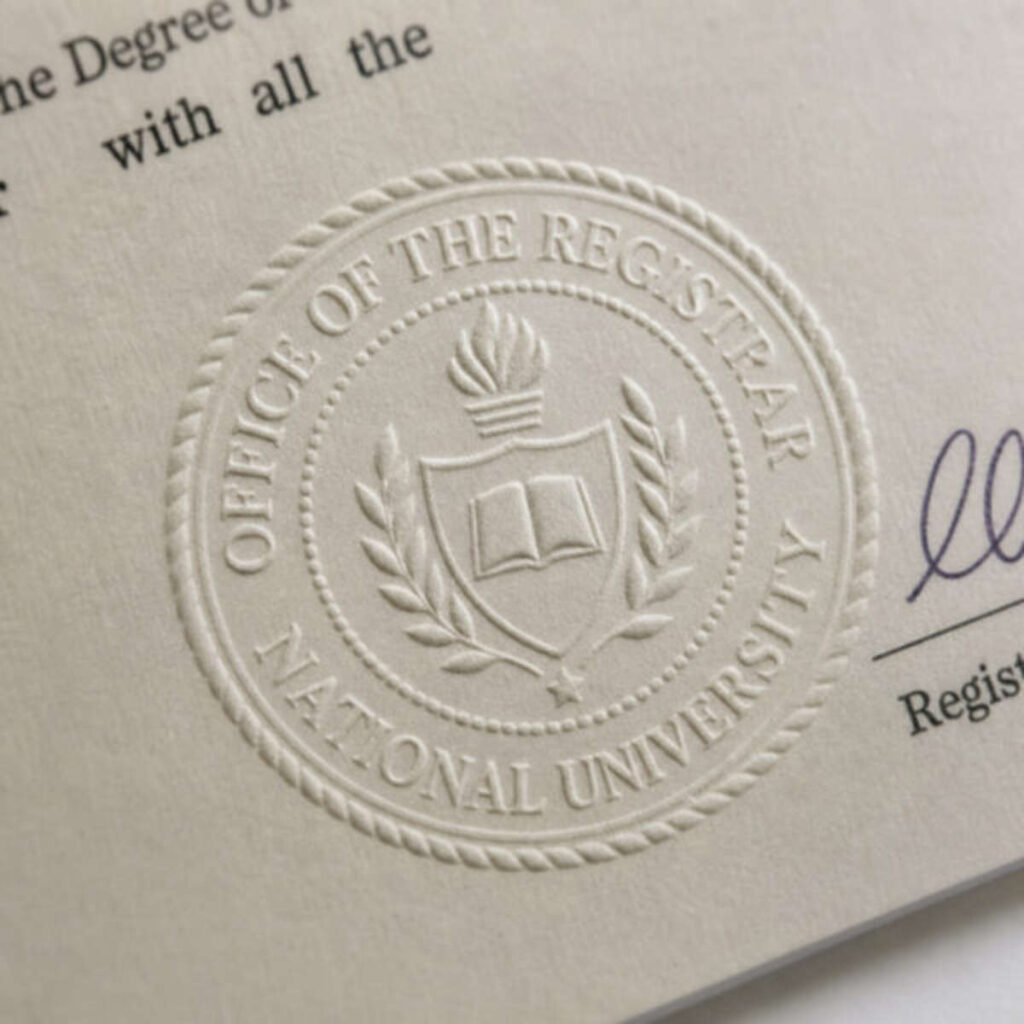
Many people begin by asking whether a diploma “looks real.” That is understandable. Physical documents can provide useful clues. Traditional security features of genuine university diplomas may include embossing, hand-stamped seals, specialty paper, official signatures, institutional language, foil marks, watermarks, serial numbers, registry references, or secure digital validation elements.
But a visual inspection is only one layer of review.
A real-looking document can still be fraudulent. A genuine diploma can also look unfamiliar if the university changed its format, merged with another institution, adopted digital credentials, updated its seal, or issued a replacement document years after graduation. International diplomas add another layer of complexity because design conventions vary widely across countries, languages, education systems, and institutions.
That is why our process treats document appearance as supporting evidence—not final proof. The strongest verification comes from the source: the university, registrar, authorized verification partner, official records office, or recognized digital credential platform.
Our Verification Philosophy
The Writing Guru approach is precise, ethical, and plainspoken:
Verify the record. Respect the person. Protect the data. Document the result.
We do not accuse. We do not speculate beyond the evidence. We do not rely on internet rumor, social media profiles, unofficial alumni lists, or diploma design assumptions as final proof. Instead, we follow a structured path that helps organizations reach a defensible conclusion.
Our process is designed around five standards:
- Legitimacy: We use institution-recognised or authorisation-based verification channels whenever possible.
- Privacy We request only the information needed for the verification and follow consent requirements where applicable.
- Accuracy We distinguish between confirmed records, partial matches, discrepancies, unavailable records, and inconclusive results.
- Documentation We provide a clear report that explains the verification source, result, and any limitations.
- Ethical boundaries We support anti-fraud review only. We do not assist with diploma creation, reproduction, alteration, or misrepresentation.
How the Diploma Verification Process Works
Credential verification should feel rigorous, not mysterious. Here is the process we use to move your request from intake to result.
1. You Submit a Verification Request
Start by sending the candidate’s or graduate’s information through our secure request form. If you are verifying a diploma for employment, licensing, admissions, or another formal purpose, you may also need the individual’s written authorization.
We review the request to confirm that we have enough information to begin. If anything is missing, we tell you before the verification clock starts.
2. We Confirm the Institution and Credential Type
Not every school name is straightforward. Some universities have similar names. Some have changed names, merged, closed, moved, or reorganized. Some credentials are issued by a college within a university system, a professional school, an overseas campus, or a partner institution.
We begin by identifying the correct institution and the proper verification pathway. This may include checking whether the credential should be verified through:
- The university registrar
- A records or enrollment office
- An authorized verification clearinghouse
- A digital credential platform
- A national education records system
- An archived records custodian for closed or merged institutions
- A professional school or faculty office
This step reduces false negatives caused by contacting the wrong office or using the wrong school name.
3. We Review Required Consent and Privacy Conditions
In the United States, FERPA generally protects the privacy of student education records, and disclosure of personally identifiable information from those records often requires signed and dated written consent unless an exception applies. The U.S. Department of Education explains that FERPA consent must identify the records to be disclosed, state the purpose of disclosure, and name the party or class of parties to whom disclosure may be made.
For some requests, limited directory information may be available under institutional policy, but schools must meet FERPA notice and opt-out requirements before disclosing directory information without consent.
Our intake process is built to help you collect the right authorization when it is needed. We are not a law firm and do not provide legal advice, but we design our workflow to support privacy-conscious credential verification.
4. We Contact the Appropriate Verification Source
Once the request is complete, we submit the verification through the proper channel. Depending on the university and country, this may involve an online portal, the registrar’s email, an official form, a third-party clearinghouse, an institutional verification service, a mailed request, or a digital credential validation system.
We prioritize official and authorized sources. If a school requires a specific process, fee, consent form, or request format, we follow that process rather than improvising.
5. We Compare the Response to the Claimed Credential
When the verification source responds, we compare the confirmed information against the submitted diploma or claim. We look for consistency in:
- Name and known name variations
- Institution name
- Degree or diploma title
- Field of study
- Graduation date or conferral date
- Attendance dates, if relevant
- Campus or school division
- Credential level
- Document language and format, where applicable
A mismatch does not automatically mean fraud. People change names. Universities rename programs. International degree titles may be translated differently. Records may be archived under maiden names, prior legal names, or local naming conventions.
That is why our report separates confirmed facts from unresolved discrepancies.
6. We Review Document-Level Indicators When Appropriate
If you provide a diploma image or scan, we may review visible features as supporting evidence. This can be useful when an institution is slow to respond, when a document appears inconsistent with the claimed record, or when you need a preliminary review before formal verification.
Our document-level review may consider high-level indicators such as:
- Whether the institution name matches the claimed issuing body
- Whether the credential language aligns with the degree level
- Whether signatures appear consistent with the stated era, when verifiable through legitimate sources
- Whether the document includes common institutional elements such as seals, registrar language, conferral wording, or official formatting
- Whether the document contains visible alterations, mismatched fonts, obvious layout irregularities, or inconsistent dates
- Whether digital validation links, QR codes, or credential IDs resolve to an authorized source
We deliberately keep this review at an anti-fraud assessment level. We do not provide technical instructions, reproduction specifications, or manufacturing details for seals, paper, stamps, embossing, or signatures.
7. We Deliver a Clear Verification Report
Your completed report explains the outcome in plain language. Depending on the facts available, a result may be categorized as:
- Verified: The issuing institution or authorized source confirms the credential.
- Partially verified: Some elements match, but one or more details are unavailable or inconsistent.
- Not verified: The institution or authorized source does not confirm the claimed credential.
- Unable to verify: Records are unavailable, consent is missing, the institution cannot be reached, or the official source does not provide the requested data.
- Further review recommended: The matter requires additional documents, direct institutional follow-up, translation, legal review, or candidate clarification.
The goal is not drama. The goal is decision-quality evidence.
What We Need to Start
To begin a diploma or degree verification, please provide as much of the following as available:
- Full name used while attending the institution
- Current legal name, if different
- Date of birth or other approved identifier, if required by the institution
- Name of the university, college, or awarding body
- Campus or location, if known
- Degree, diploma, or certificate title claimed
- Major, field of study, or program name
- Graduation date, conferral date, or approximate attendance dates
- Student ID number, if available and appropriate to share
- Copy or image of the diploma, if you want a document-level review
- Transcript copy, if relevant and legally permitted
- Candidate or graduate authorization, when required
- Your organization name and verification purpose
- Any deadline or compliance requirement
Please do not send unnecessary sensitive information. If a school does not require a data element, we prefer not to collect it.
Turnaround Times
Turnaround depends on the institution, country, record age, consent status, and whether the university uses an automated verification system. We provide an estimated timeline after reviewing your request.
Typical turnaround categories include:
- Automated or authorized database verification: Often completed within the same day or a few business days when all details match and access is available.
- Registrar or records office verification: Commonly requires several business days, depending on the institution’s response time.
- International verification: May take longer due to time zone differences, translation needs, holidays, local privacy rules, or institution-specific procedures.
- Archived, closed, merged, or renamed institution records: May require additional research to identify the current records custodian.
- Complex discrepancy review: May take longer if names, dates, degree titles, or institutional histories do not align.
Need a faster answer? Choose rush handling at intake if available. Rush handling prioritizes our internal processing, but it cannot force a university, registrar, government office, or third-party verification partner to respond faster than its own procedures allow.
Pricing Options
Credential verification pricing depends on the number of credentials, source fees, country, complexity, rush handling, translation needs, and whether you need document-level review in addition to source verification.
Use the placeholders below to present your final rates when publishing the page.
Single Verification
Best for one diploma, degree, or certificate verification.
Includes:
- Intake review
- Institution pathway check
- Standard verification submission
- Result summary
- Basic discrepancy notes
Price placeholder: $[Single Verification Price]
CTA: Start a Single Verification
Standard Employer Package
Best for HR teams verifying one candidate’s academic claim as part of hiring or promotion.
Includes:
- Candidate authorization review
- Degree or diploma verification request
- Registrar or authorized partner follow-up
- Clear report for internal hiring file
- Status updates during processing
Price placeholder: $[Employer Package Price]
CTA: Verify a Candidate Credential
Multi-Credential Review
Best for candidates with multiple degrees, multiple institutions, or domestic and international credentials.
Includes:
- Multiple credential intake
- Institution-by-institution verification planning
- Source-specific tracking
- Consolidated report
- Discrepancy summary across records
Price placeholder: $[Multi-Credential Price]
CTA: Request Multi-Credential Verification
Enterprise and Screening Partner Plan
Best for background screening firms, large employers, licensing bodies, universities, and regulated organizations with recurring verification volume.
Includes:
- Batch request workflow
- Custom intake requirements
- Account-level reporting
- Service-level expectations
- Optional API or secure file exchange discussion, if available
- Dedicated support contact, if offered
Price placeholder: Custom quote
CTA: Request an Enterprise Quote
Optional Add-Ons
Depending on the request, optional services may include:
- Rush internal handling: $[Rush Fee]
- International institution research: $[International Research Fee]
- Document-level review: $[Document Review Fee]
- Translation coordination: $[Translation Coordination Fee]
- Archived or closed institution research: $[Archive Research Fee]
- Additional follow-up attempts: $[Follow-Up Fee]
Final pricing should be confirmed before work begins. Some universities, clearinghouses, or records custodians may charge their own third-party verification fees.
What Makes a Verification Strong?
A strong verification is source-based, documented, and limited to what can be supported.
The most reliable confirmations generally come from:
- A registrar or official records office
- An authorized institutional verification partner
- A recognized academic clearinghouse
- A secure digital credential platform controlled by the issuer
- A government or ministry education records source, where applicable
- A lawful records custodian for a closed or merged institution
A weaker verification relies only on:
- A diploma image with no source confirmation
- A résumé or LinkedIn profile
- A photo of a graduation ceremony
- An alumni directory without degree confirmation
- A personal reference
- A document design comparison without institutional context
- An email from an unverified address
Our service is built to prioritize strong verification wherever possible.
Evaluating Security Features Without Crossing Ethical Lines
Security features can help determine whether a document deserves closer review, but they should never be used as a how-to guide for imitation. Our assessment focuses on risk indicators and institutional consistency, not reproduction details.
When reviewing the security features of genuine university diplomas, we may consider the presence, absence, or consistency of elements such as:
- Raised or embossed seals
- Hand-stamped seals or registrar marks
- Institutional letterhead or crest placement
- Signature blocks for authorized officials
- Paper quality indicators visible in the scan or original document
- Watermark references, where the institution publicly identifies them
- Digital certificate IDs or secure validation links
- QR codes that point to official credential platforms
- Tamper-evident digital metadata, when available
- Conferral wording consistent with the institution’s credential style
- Date formats that align with the institution or country
- Program names that existed during the claimed period
Just as important, we avoid unsafe territory. We do not describe how to recreate embossing, imitate paper, forge signatures, produce seals, simulate stamps, or alter a diploma. Ethical verification protects institutions and graduates by confirming records—not teaching fraudsters what to copy.
Common Red Flags We Review
A red flag is not a verdict. It is a reason to verify carefully.
Potential concerns may include:
- The institution has no credible evidence of authorization, recognition, or historical existence
- The school name closely resembles a legitimate university, but is not the same institution
- The degree title does not match the university’s known programs
- The graduation date falls before the program existed or after it was discontinued
- The claimed campus did not operate during the stated attendance period
- The diploma includes inconsistent names, dates, seals, or signatures
- The document shows signs of visible alteration
- A QR code or validation link does not resolve to an official source
- The candidate cannot provide consent for records release when required
- The institution reports no matching record
- The university requires verification through a different official pathway than the one used by the applicant
We approach every discrepancy carefully. Sometimes the explanation is ordinary: a name change, a translation issue, a replacement diploma, an archived record, an institutional merger, or a delayed conferral. The report reflects the evidence, not assumptions.
Domestic and International Diploma Verification
Academic credentials do not follow one global format. A bachelor’s degree in one country may not look, read, or verify like a bachelor’s degree in another. Some countries centralize education records. Others rely on individual universities. Some institutions issue digital credentials. Others still require signed forms, physical mail, or an email from the registrar.
Our process adapts to those differences.
For domestic verification, we generally focus on the institution’s registrar, authorized clearinghouse, or official records process.
For international verification, we may also consider:
- Local language versions of the institution name
- Ministry or government recognition sources
- Country-specific degree structures
- Program duration and credential level
- Translation of diploma terminology
- Time zone and holiday-related delays
- Whether the institution requires graduate authorization in a specific format
- Whether a local records custodian or the faculty office handles verification
International cases may require more time, but they benefit from the same disciplined framework: identify the source, submit the request properly, document the result, and report only what can be supported.
Authentic Diplomas in the Age of Digital Credentials
More universities now issue secure digital credentials alongside or instead of paper diplomas. These may include digitally signed documents, blockchain-backed credentials, secure portals, QR verification, metadata, or issuer-controlled validation pages.
Digital credentials can speed up verification, but only when the validation source is legitimate. We review whether a digital diploma or certificate resolves to an official university-controlled platform or recognized credential provider. We also verify that the digital credential data matches the claim under review.
For modern authentic diplomas, the strongest evidence may be a combination of:
- Official registrar confirmation
- Secure digital credential validation
- Matching institutional records
- Candidate consent, where required
- Document-level consistency
- Clear chain of custody from the issuer to the reviewer
A screenshot of a digital credential is not the same as live validation. Whenever possible, we verify through the official credential link, issuer platform, or institutional records process.
Why Choose Our Verification Service?
You could try to verify a diploma yourself. Many organizations do. But self-managed verification can become slow, inconsistent, and risky when the institution has unique requirements or when privacy rules apply.
Our service provides a guided process, consistent documentation, and a trained review.
Clear Intake
We help you collect the right information at the beginning, reducing delays caused by incomplete names, missing dates, unclear degree titles, or absent authorization.
Authorized Pathways
We look for registrar-approved methods, authorized verification partners, secure credential systems, and recognized records custodians.
Anti-Fraud Focus
We know what deserves scrutiny without turning the review into speculation. We evaluate risk indicators while protecting legitimate graduates from careless assumptions.
Privacy-Conscious Workflow
We encourage data minimization, consent-based disclosure, secure handling, and appropriate retention practices.
Decision-Ready Reports
We write reports in clear language so HR, compliance, admissions, legal, or licensing teams can understand what was verified, what was not, and what may require next steps.
Scalable Support
Whether you need one verification or recurring volume, the workflow can be adapted to your organization’s needs.
Product Features
Our diploma verification service includes a practical set of features designed for real-world credential review.
Secure Request Intake
Submit candidate and credential details through a secure intake process. We check the request for completeness before moving forward.
Consent Review
When written authorization is required, we help identify missing consent information so your request is less likely to be rejected by the institution.
Institution Pathway Research
We determine whether the credential should be verified through a registrar, clearinghouse, digital platform, records custodian, government source, or another authorized channel.
Source-Based Verification
We seek confirmation from legitimate sources rather than relying solely on the appearance of documents.
Diploma Image Review
When provided, we review the document at a high level for visible inconsistencies and relevant security indicators without giving counterfeiting guidance.
Discrepancy Analysis
If details do not match, we identify the nature of the discrepancy and whether further review may resolve it.
Status Updates
You receive updates based on the service level selected and the complexity of the request.
Final Verification Report
The completed report summarizes the credential reviewed, source contacted, result, limitations, and recommended next steps when applicable.
Benefits for Employers
Hiring decisions move faster when academic claims are verified early and consistently.
With our service, employers can:
- Reduce risk from false degree claims
- Support fair candidate screening
- Document due diligence
- Improve consistency across hiring teams
- Protect regulated roles from unqualified applicants
- Avoid relying on diploma images alone
- Maintain a respectful candidate experience
- Create an audit trail for internal compliance
A verified degree can strengthen confidence in a hire. An unverified or inconsistent claim can help your team pause, ask better questions, and follow your policy before making a final decision.
Benefits for Universities and Admissions Teams
Admissions offices often review prior credentials from many institutions and countries. Our process can help teams organize verification requests, identify proper source pathways, and flag incomplete or inconsistent documents.
Use cases include:
- Graduate admissions review
- Transfer student documentation
- International applicant screening
- Professional program prerequisites
- Scholarship eligibility
- Academic misconduct investigations
- Partner institution validation
A careful process helps protect academic integrity without creating unnecessary friction for legitimate applicants.
Benefits for Licensing and Compliance Teams
Credential requirements are often tied to public trust. In healthcare, education, engineering, finance, public safety, government contracting, and other regulated settings, a false academic claim can create serious exposure.
Our verification service helps licensing and compliance teams:
- Confirm minimum education requirements
- Document verification attempts
- Review discrepancies consistently
- Separate source-confirmed facts from unsupported claims
- Maintain internal records for audits
- Support fair and defensible decisions
Where licensing rules, statutory requirements, or legal consequences apply, we recommend consulting qualified counsel or the appropriate regulatory authority. Our role is to support credential verification, not to provide legal determinations.
What We Do Not Do
Because this service is explicitly anti-fraud, our boundaries are firm.
We do not:
- Create diplomas, certificates, or transcripts
- Modify academic documents
- Provide fake diplomas or novelty diplomas
- Replicate seals, signatures, stamps, embossing, or speciality paper
- Explain how to counterfeit security features
- Guarantee that a document is genuine based only on appearance
- Access records unlawfully
- Misrepresent the purpose of a verification request
- Bypass university policies or privacy requirements
- Pressure registrars or records offices to disclose restricted information
Our work protects the value of genuine credentials by verifying them through proper channels.
Request Verification
Ready to verify a diploma, degree, or certificate?
Start with the request form and include the information you already have. If anything is missing, we will guide you through the next step.
Primary CTA: Request Verification Now For teams: Ask About Volume Verification For urgent cases: Request Rush Review
Before submitting, make sure you have:
- The graduate’s full name is used at the institution
- Institution name and country
- Claimed degree or diploma
- Graduation or attendance date
- Written authorization, if required
- Diploma image, if document-level review is requested
- Your deadline and purpose for verification
Privacy and Compliance Notes
Credential verification often involves personal information. We treat that responsibility seriously.
Our privacy-conscious workflow is based on the following principles:
- Data minimization: We request only what is needed for the verification.
- Purpose limitation: Information is used for the verification purpose you identify.
- Consent awareness: When authorization is required, we request appropriate documentation before seeking restricted records.
- Secure handling: Documents should be submitted through approved secure channels rather than via informal, non-secure sharing.
- Limited access: Verification information should be available only to personnel with a legitimate need to review it.
- Clear retention practices: Records should be retained only as long as needed for the stated business, compliance, or legal purpose.
- Transparent reporting: We identify what was verified, the source used, and any limitations.
FERPA applies to many U.S. education records, and the Department of Education defines disclosure as access to, release, transfer, or communication of personally identifiable information from education records.
This page provides general information, not legal advice. If your organization has specific FERPA, employment law, admissions, licensing, cross-border data transfer, or record-retention questions, consult qualified counsel or your compliance officer.
Handling Candidate Consent
A good verification process should be clear to the person whose credentials are being reviewed. If you are an employer, school, licensing body, or screening organization, explain:
- Why is the diploma or degree being verified
- What records may be requested
- Who will receive the result
- How the information may be used
- What happens if the record cannot be verified
- How can the candidate correct inaccurate information
Clear consent language reduces delays and supports trust. It also helps the registrar or verification partner process the request without unnecessary back-and-forth.
When a Diploma Cannot Be Verified
An inability to verify does not always mean the credential is false. It means the source did not confirm the credential based on the available information and access.
Common reasons include:
- Missing or incomplete consent
- Name mismatch
- Date of birth mismatch
- Former name not provided
- Student ID missing where required
- Institution records are archived
- School has merged, closed, or changed names
- Registrar response is pending
- International Records Office requires additional forms
- The digital credential link has expired
- The degree title was translated differently
- The institution does not disclose certain details to third parties
When this happens, we explain the limitation and recommend next steps, such as obtaining updated authorization, requesting a transcript, asking the candidate for name history, contacting an archive custodian, or submitting through a different official pathway.
How We Report Discrepancies
Discrepancy reporting requires care. A mismatch can be meaningful, but it can also be explainable.
Our reports may identify discrepancies such as:
- Name differs from institutional record
- Degree level differs from the claim
- The major or field of study differs
- The graduation date differs
- Attendance confirmed, but degree not confirmed
- The institution confirms no matching record
- The institution could not locate the record with supplied identifiers
- Document details do not align with source-confirmed information
- Verification source requires additional consent or documentation
We avoid inflammatory language. Instead of calling a document fake without support, we state what the official source confirmed or did not confirm. That makes the report more useful, more professional, and more defensible.
The Difference Between Diploma Verification and Transcript Evaluation
Diploma verification and transcript evaluation are related but not the same.
Diploma verification asks whether a claimed credential was issued or can be confirmed by the institution or authorized source.
Transcript evaluation reviews coursework, grades, credits, academic level, and equivalency, often for admissions, licensing, immigration, or employment purposes.
Our service focuses on verifying the existence and legitimacy of the credential claim. If your organization needs course-by-course evaluation, GPA conversion, foreign degree equivalency, or professional licensing analysis, we can note that additional evaluation may be needed, but we do not invent equivalency conclusions.
Why Genuine University Diplomas Still Need Verification
Even legitimate documents benefit from verification. A graduate may hold a real diploma, but an employer or university still needs confirmation that the document matches institutional records.
Verification protects:
- The graduate, by confirming their achievement accurately
- The institution, by preserving the value of its awards
- The employer, by reducing negligent hiring risk
- The public, by preventing unqualified representation
- The admissions process, by ensuring fair review
- The organization, by supporting compliance and audit readiness
The goal is not suspicion. The goal is trust with evidence.
Security Features We May Discuss in a Verification Report
When document-level review is part of the engagement, we may describe visible features in broad terms, such as:
- The document includes an embossed seal consistent with the official diploma format used by some institutions.
- The document includes a hand-stamped mark that may require confirmation from the registrar.
- The signature block appears to identify university officials, but the authority and date should be verified through the institution.
- The paper document contains visible marks that may be consistent with a speciality diploma paper, but physical inspection or source confirmation is needed.
- The digital credential includes a validation link that should be verified on the official issuer’s platform.
We do not convert these observations into a standalone authenticity guarantee. Security features support the review, but the official record remains the anchor.
Quality Control
Every verification benefits from careful handling. Our quality control process may include:
- Reviewing the request for completeness before submission
- Confirming the institution pathway before contacting a source
- Checking whether consent is present when required
- Recording the verification method used
- Comparing the source response to the claimed credential
- Flagging discrepancies for review
- Preparing a plain-language result summary
- Maintaining internal notes appropriate to the selected service level
For complex cases, a second review may be used before final delivery.
Secure Submission Tips
To help your request move smoothly, follow these best practices:
- Submit clear, legible images of the diploma if a document review is requested.
- Provide the name used during attendance, not only the current name.
- Include the exact institution name shown on the diploma.
- Add the campus, college, or school division if shown.
- Provide an approximate graduation date if the exact date is unknown.
- Use a secure upload method rather than email attachments when possible.
- Do not redact details the registrar needs to locate the record, unless instructed.
- Do not send Social Security numbers unless specifically required through an approved secure process.
- Provide consent forms early to avoid delays.
Small intake details often determine whether a verification is completed quickly or returned for more information.
For High-Volume Teams
If your organization verifies credentials frequently, a one-off process can become difficult to manage. We support scalable workflows for teams that need to conduct repeatable credential reviews.
High-volume options may include:
- Standardized request forms
- Predefined candidate authorization language
- Batch submission support
- Priority routing for complete requests
- Custom reporting fields
- Team-level status summaries
- Monthly invoicing, if available
- Volume pricing placeholders
- Escalation paths for complex cases
If you handle recurring hiring, admissions, licensing, or compliance verification, ask about an enterprise workflow.
CTA: Request a Volume Verification Consultation
For Individuals Verifying Their Own Diploma
You may want to verify your own record before applying for a job, submitting to a licensing board, or enrolling in another academic program. We can help you understand the likely verification pathway and identify the information you may need to provide.
This is especially useful if:
- Your name has changed since graduation
- Your university has merged or closed
- Your diploma was issued years ago
- You studied internationally
- Your employer cannot locate your record
- You need to resolve a discrepancy before a deadline
- You have a digital credential and want to confirm that the validation link works
A proactive verification can prevent delays later.
Results You Can Understand
A verification report should not read like a riddle. We write for the people who actually need to use the result: HR managers, admissions officers, compliance analysts, recruiters, licensing reviewers, and candidates.
Our report language is designed to answer:
- What credential was reviewed?
- What information was provided?
- What source was used?
- What did the source confirm?
- What did the source not confirm?
- Were there discrepancies?
- Are additional steps recommended?
- Are there limitations to the result?
The report is concise, structured, and practical.
Why Ethical Verification Matters
Credential fraud harms everyone. It devalues the work of legitimate graduates, damages institutional trust, and exposes organizations to risk. But careless verification can also cause harm by mishandling private information or making unfair assumptions based on incomplete evidence.
Ethical verification avoids both extremes.
It does not treat every candidate as suspicious. It also does not accept every document at face value. It creates a responsible process where academic claims are checked through legitimate sources and results are reported accurately.
That is the standard we bring to every request.
Start With the Right Question
The best verification work begins with the right question.
Not: “Does this diploma look convincing?”
Better: “Can the issuing institution or authorized source confirm that this credential was awarded to this person?”
That shift changes everything. It moves the process away from design judgment and toward evidence. It protects against sophisticated fakes. It also protects legitimate graduates whose documents may appear different due to age, replacement status, international formatting, or institutional changes.
If you need to evaluate genuine university diplomas, start with source confirmation.
FAQ
How do I verify whether a university diploma is genuine?
The most reliable method is to verify the credential through the issuing university, registrar, authorized verification partner, official digital credential platform, or recognized records custodian. A visual review of security features may be helpful, but it should not replace source confirmation.
Can you tell if a diploma is fake from a photo?
Sometimes a photo reveals red flags, such as inconsistent names, unusual formatting, questionable seals, or visible alterations. However, a photo alone is not enough for a definitive conclusion. We recommend document-level review plus official source verification whenever possible.
Do you provide instructions for identifying security features?
We provide high-level, ethical review of visible security indicators, such as embossing, hand-stamped seals, paper characteristics, signatures, and digital validation elements. We do not provide counterfeiting instructions, reproduction specifications, or guidance that could help someone create a fake diploma.
What are common security features of genuine university diplomas?
Common features may include embossed seals, hand-stamped marks, speciality paper, official signatures, watermarks, secure digital credential links, QR validation, certificate IDs, or registrar language. Features vary by institution, year, country, and credential type, so they should be evaluated in context.
Are authentic diplomas always printed on special paper?
No. Many traditional diplomas use speciality paper or formal printing methods, but formats vary. Some institutions issue digital credentials. Others issue replacement diplomas that look different from originals. Paper type alone cannot prove authenticity.
Can a real diploma have a discrepancy?
Yes. Discrepancies can result from name changes, translation differences, replacement documents, school mergers, archived records, date formatting, or changes to program names. A discrepancy should be investigated before drawing conclusions.
What if the university has closed?
Closed institutions may have records held by a state agency, a ministry of education, a successor institution, an archive, a trustee, or a designated records custodian. We research the likely custodian and, when available, pursue verification through the appropriate channel.
Do you verify international diplomas?
Yes, subject to institution access, local rules, consent requirements, language needs, and available verification channels. International verifications may take longer than domestic requests.
Do you verify transcripts too?
We can review transcript-related information to support credential verification, but transcript evaluation is a separate service area. Course-by-course equivalency, GPA conversion, and professional licensing evaluation may require a specialized evaluator.
Is candidate consent required?
Often, yes, especially when personally identifiable information from education records must be disclosed. In the United States, FERPA generally requires signed and dated written consent for disclosure of education records unless an exception applies. Consent requirements vary by institution and jurisdiction.
What should a consent form include?
Under FERPA guidance, consent for disclosure should specify the records that may be disclosed, state the purpose of the disclosure, and identify the party or class of parties to whom disclosure may be made. It must also be signed and dated.
How long does verification take?
Some database or digital verifications may be completed quickly. Registrar-based, international, archived, or complex cases can take longer. We provide an estimated turnaround after reviewing your request and the verification pathway.
Can you guarantee a turnaround time?
We can prioritise our internal handling based on the selected service level, but we cannot control how quickly a university, registrar, clearinghouse, government office, or records custodian responds.
What happens if the institution does not respond?
We document the attempt, follow the selected service-level process, and identify possible next steps. These may include alternate contact methods, additional consent, candidate clarification, archive research, or a final “unable to verify” result if no source confirmation is available.
What if the diploma is not verified?
We report the result clearly and professionally. “Not verified” means the official or authorized source did not confirm the claimed credential based on the information available. Your organization should follow its internal policy before making employment, admissions, licensing, or disciplinary decisions.
Do you contact the candidate?
That depends on the service arrangement. Some clients manage candidate communication directly. Others request candidate authorization support or clarification workflows. We define this before work begins.
Can you verify degrees from diploma mills?
We can review the claimed institution and available verification sources. If an institution lacks credible authorization or recognition, we document the concern carefully. We do not make legal determinations unless supported by appropriate sources, and we recommend compliance or legal review where needed.
Do you store diploma copies?
Retention depends on the selected service, client requirements, and applicable policies. We recommend retaining only what is necessary for the verification purpose and the required compliance period. Sensitive documents should be handled through secure channels.
Is this service legal advice?
No. Our service supports credential verification. It does not provide legal advice, employment law guidance, FERPA legal opinions, licensing determinations, or immigration advice. Consult qualified counsel for legal questions.
Ready to Verify a Diploma?
You do not need to rely on guesswork, document appearance, or uncomfortable uncertainty. A legitimate credential verification process gives you a clearer answer, a better record, and a more defensible decision.
Whether you are confirming a single degree or building a repeatable verification workflow, we can help you review genuine university diplomas, ethically assess document-level indicators, and confirm academic records through the right channels.
Start your verification request now.
Request Verification Ask About Pricing Contact a Verification Specialist
