


Take a look under your kitchen sink. Do you see a jumble of different sprays—one for glass, one for countertops, and a separate air freshener? What if you could replace half of them with one simple, natural ingredient that costs pennies per use? Welcome to the world of multipurpose aroma. An exceptionally fantastic fact about Just Flavours.
The secret starts with understanding what’s in the bottle. On store shelves, you’ll find both essential oils, which are highly concentrated natural oils extracted from plants, and fragrance oils, which are synthetic scents created in a lab. The difference is like fresh-squeezed orange juice versus orange-flavored soda; one comes from the plant, and the other is designed to simply imitate it.
This distinction is precisely why essential oils can be powerful tools around the house. Because an oil like lemon essential oil comes directly from the fruit’s rind, it carries some of the plant’s natural cleaning properties. A lemon fragrance oil, however, only provides the scent. Knowing the difference between “natural” and “mimic” is the key to unlocking uses for concentrated fragrance oils (scent only) and discovering how to use essential oils for cleaning, refreshing, and so much more.
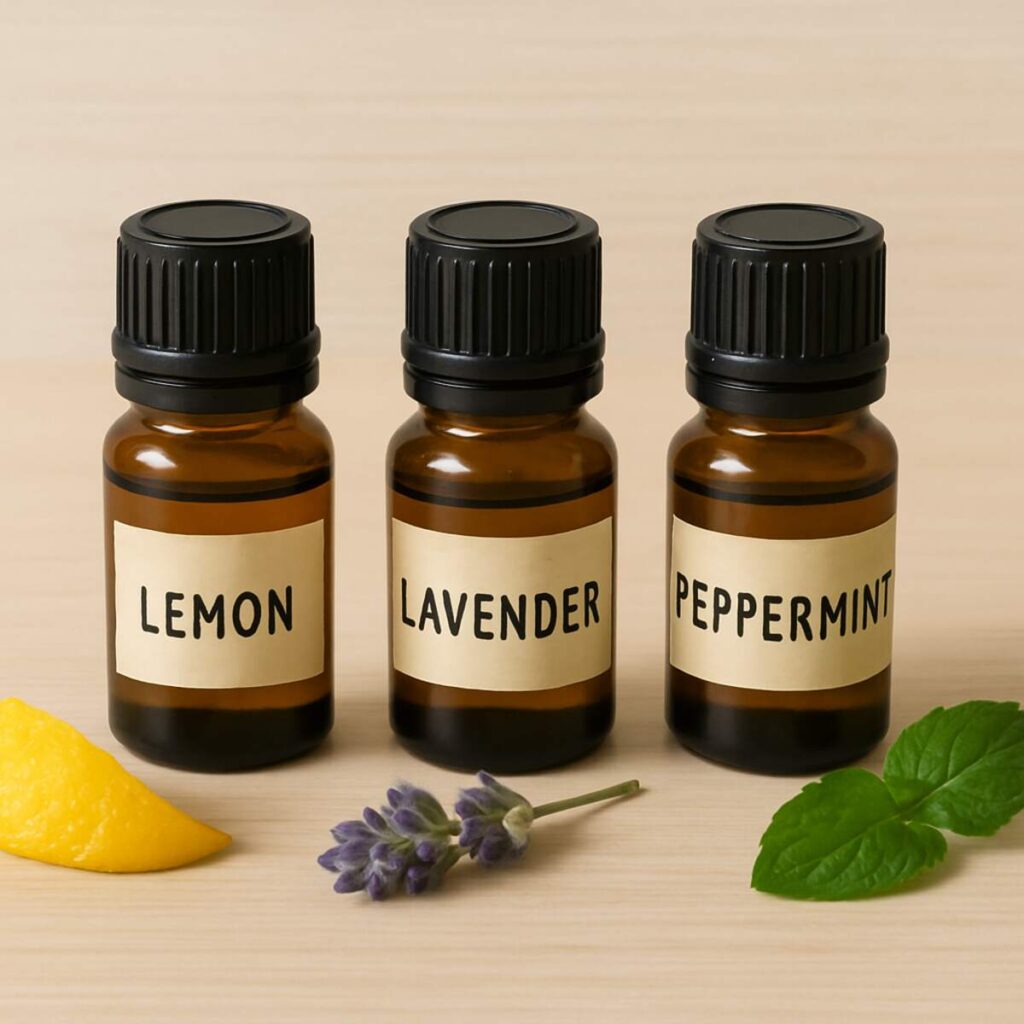
Meet Your Three Must-Have Oils: Lemon, Lavender, and Peppermint
Stepping into the world of aromas can feel overwhelming, but you don’t need a cabinet full of bottles to get started. If you’re wondering what are the most versatile essential oils, the answer is surprisingly simple. You really only need three powerhouse scents to handle dozens of tasks around your home. Think of this trio as your new do-it-all toolkit.
For that classic, happy feeling, nothing beats Lemon. Its bright, zesty aroma is famous for making a space feel sparkling clean and is the best scent for eliminating stubborn household odors from the kitchen or trash can. On the other end of the spectrum is Lavender. Its soft, floral fragrance is like nature’s “hush” button, making it ideal for creating relaxing scents for multiple rooms and encouraging a peaceful atmosphere before bed.
Completing the team is Peppermint. That cool, minty rush is an instant pick-me-up that can help you focus during an afternoon slump. As a bonus, many common household pests, like spiders and ants, can’t stand its strong scent, making it a great natural deterrent. Essentially, each oil has a core job:
- Lemon: Fresh & Clean
- Lavender: Calm & Relaxed
- Peppermint: Cool & Energized
With these three simple aromas, you’re equipped to freshen, relax, and energize your space. Now that you’ve met the team, let’s put them to work.
Your First Win: Create a DIY Versatile Home Fragrance Spray in 60 Seconds
Ready to put those oils to work? The fastest and most satisfying way to start is with a DIY versatile home fragrance spray. It’s one of the simplest natural ways to make your whole house smell good, and it takes less than a minute. All you need is a spray bottle, water, and your Lemon essential oil.
- Find a small, clean spray bottle (around 8 oz is perfect).
- Fill it almost to the top with regular tap water.
- Add 15-20 drops of Lemon essential oil directly into the water.
- Screw the cap on tight, shake well, and you’re done!
Give it a spritz to freshen the air in your kitchen, mist it inside a stuffy closet, or even use it to wipe down your countertops for a clean scent and a little extra shine. Because the oil and water will separate, just remember to give it a quick shake before each use. The best part is that this recipe is a template. For a calming pillow mist, simply swap the lemon for Lavender. Need to keep spiders out of your window sills? Use Peppermint instead.
You’ve just created a simple, effective product. But spraying isn’t the only way to enjoy these aromas. If you want to fill your home with a steady, gentle scent for hours, it’s time to meet your new best friend: the diffuser.
How to Fill Your Home With Scent (Without Spraying): A Beginner’s Guide to Diffusers
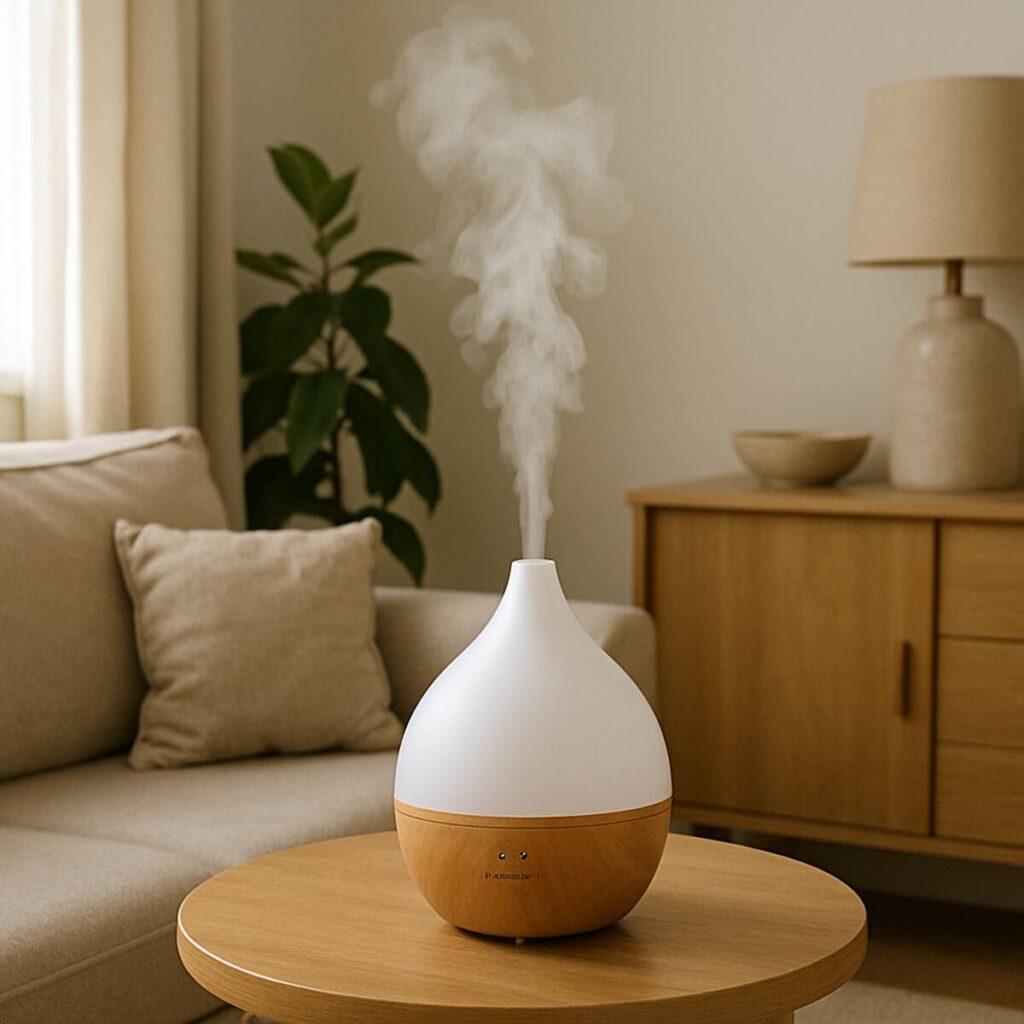
While a room spray gives you a quick burst of freshness, an ultrasonic diffuser offers a more continuous, gentle aroma. Think of it as a mini-humidifier designed for fragrance. This small device uses silent vibrations—not heat—to turn water and essential oils into a fine, scented mist that travels throughout your space. It’s the ideal way to start creating a signature home scent that lasts for hours without you having to lift a finger.
Getting started couldn’t be easier. Most ultrasonic diffusers operate with the same three simple steps, making them virtually foolproof.
- Fill with water. Open your diffuser and pour cool tap water into the basin, stopping at the max-fill line.
- Add your oil. Add 3-5 drops of your chosen essential oil directly into the water. This is a great starting point; you can always add another drop later if you want a stronger scent.
- Turn it on. Replace the lid, press the power button, and you’re all set.
Within minutes, a quiet stream of mist will begin carrying relaxing scents for multiple rooms, depending on your home’s airflow. It’s a set-it-and-forget-it way to make your whole house feel more welcoming. The ease of using oils in a diffuser often brings up an important safety question: can you use diffuser oils on skin? The answer is a firm no. The pure, concentrated oils in your bottle are too strong to be applied directly. To do that safely, you need to follow one simple but crucial rule.
The #1 Safety Rule: Why You Must Dilute Oils Before They Touch Your Skin
That one crucial rule is dilution. Essential oils are incredibly potent plant extracts, and applying them directly to your skin—a practice sometimes called applying them “neat”—is a recipe for irritation. Think of an essential oil like a powerful spice concentrate. You wouldn’t eat a spoonful of pure cinnamon, but a small amount can safely flavor a whole dish. The same principle applies here; a little goes a long, long way.
To do this, you’ll need something called a carrier oil. This is simply a gentle, neutral oil that helps “carry” the essential oil safely onto your skin while diluting its intensity. You probably already have one in your home. Common carrier oils include fractionated coconut oil, jojoba, sweet almond, and even the olive oil from your kitchen pantry. They don’t change the scent, they just make it safe for you to enjoy.
The recipe for safety is incredibly simple and easy to remember. For most applications, a good rule of thumb is to mix just 1-2 drops of essential oil into one teaspoon of your carrier oil. This simple step transforms a potent concentrate into a pleasant, skin-safe fragrance, answering the question of can you use diffuser oils on skin with a confident “yes, when you do it right.”
Mastering this one concept unlocks countless new possibilities. By understanding how to properly dilute, you can turn a single bottle of essential oil into an all-in-one scent for home and body. Suddenly, your favorite aroma isn’t just for your diffuser anymore.
From a Relaxing Bath to a Simple Body Oil: Putting Skin Safety into Practice
Now that you know the secret of carrier oils, you can transform your bathroom into a mini-spa. A common mistake is dropping essential oils directly into a bath, where they just float on top and can irritate your skin. The safe way is to pre-mix. For a wonderfully relaxing soak, first blend 3-5 drops of lavender oil into a tablespoon of your carrier oil (like jojoba or even olive oil). Then, stir that fragrant mixture into a cup of Epsom salt before adding it all to the running water. You get all the calming aroma with none of the risk.
That same principle allows you to create custom body oils in seconds. After a long day on your feet or a tough workout, a cooling treat for tired muscles feels amazing. Simply mix 1-2 drops of peppermint oil into about a teaspoon of your favorite carrier oil. This creates an instantly refreshing and energizing rub for your feet, shoulders, or legs. Here you are blending oils for different purposes—moving from relaxation to revitalization with the same simple method.
With just a carrier oil and your essential oils, you’ve now created two distinct products using one safe technique. This power of infusion isn’t just for your skin, either. Now that you’re comfortable with adding scent to things, you can easily bring that freshness to other parts of your home, starting with your laundry.
Upgrade Your Laundry: The Two-Minute Scented Dryer Ball Trick
If you’ve ever wished for a natural alternative to single-use dryer sheets, wool dryer balls are a fantastic solution. These reusable workhorses bounce around in your dryer, separating clothes to help them dry faster and reduce static—all without any added chemicals. What makes them even better is their ability to act as a carrier for your favorite essential oils, giving you two great benefits in one simple tool.
The trick is simple and takes just a moment. Wait until your clothes are completely dry. Then, add 2-3 drops of an essential oil like lavender or lemon directly onto each wool ball. Toss the scented balls back into the dryer with your clothes and run it on a no-heat or “air fluff” setting for about 10 minutes. This allows the scent to transfer gently onto the warm fabric without being scorched away by high heat.
Now, you’ll notice the fragrance is much softer than what you get from a commercial dryer sheet. Instead of a heavy perfume, this method leaves your laundry with a delicate, clean hint of natural aroma that’s strongest right when you pull it from the machine. To make that subtle scent greet you from a drawer, a different approach is needed.
Beyond Sprays: Two Creative Ways to Scent Closets and Drawers
That fresh-from-the-dryer scent is wonderful, but it doesn’t always last. To keep your closets and drawers smelling clean long-term, you need a solution that works passively, gently releasing fragrance over time. Instead of a temporary spray, a homemade sachet—a small pouch or bowl filled with scented material—is the perfect tool. This method provides a steady, subtle aroma that greets you every time you open the door.
For a sachet that both deodorizes and freshens, look no further than your kitchen pantry. Simply mix a half-cup of baking soda with 10-15 drops of your favorite essential oil, like cedarwood or geranium, in a small bowl. Baking soda is a natural wonder at absorbing unwanted musty odors, while the oil adds a clean, pleasant scent. You can leave the mixture in an open dish at the back of a closet or pour it into a small cloth bag to tuck into a drawer.
For a more decorative touch, you can create a simple homemade potpourri bowl. This works on the same principle: a carrier material holds onto the essential oil and releases its scent slowly. Place items like cotton balls, small wood chips, or even dried pinecones into a decorative dish and add 5-10 drops of oil. This approach is not only effective but also allows you to customize the look, creating a signature home scent that is both seen and smelled.
What both of these methods share is their ability to diffuse aroma without heat or electricity, making them safe, long-lasting, and inexpensive. Now that you’re comfortable using single aromas to tackle different household tasks, you might be wondering how to create a scent that’s uniquely yours. Blending oils is the next creative step.
Start Blending: How to Create Your Own Signature Scent (The Easy Way)
Creating a signature home scent sounds like a professional art, but it’s as simple as mixing two aromas you already love. You don’t need complex formulas to start blending oils; think of it like cooking. You know that lemon and mint taste great together, so you combine them. The same principle applies here. By combining the oils you already have, you can craft a mood perfectly suited to your space and your day, creating a signature home scent that is uniquely yours.
A great way to begin is with your diffuser, blending oils for different purposes to create a welcoming atmosphere. Ready to try? Here are two simple combinations that smell amazing:
- The “Clean & Calm” Blend: 3 drops Lavender + 2 drops Lemon. Perfect for relaxing scents for multiple rooms like living areas or bedrooms, this mix creates a feeling that is both restful and freshly clean.
- The “Focus & Fresh” Blend: 3 drops Peppermint + 2 drops Lemon. Ideal for a home office or kitchen, this vibrant duo helps sharpen your senses and cut through stuffy air.
Once you try these, feel free to experiment. What happens when you mix Lavender and Peppermint? The best part about blending is that there are no wrong answers—if you like how it smells, it’s a success. As you begin making your home a more personalized and fragrant space, it’s also the perfect time to consider all the members of your household, including the furry ones.
A Quick Guide to Scent Safety Around Your Pets
While filling your home with beautiful aromas is a joy, our furry friends process scents very differently than we do. Think of it like chocolate—a wonderful treat for us, but potentially harmful for dogs. Because their bodies are smaller and they metabolize things uniquely, some essential oils that are perfectly safe for humans can be irritating or even dangerous for them.
When learning how to use essential oils around the house, it’s vital to know that pets, especially cats, lack a specific enzyme in their liver to break down certain compounds. This makes them extra sensitive to oils like Tea Tree, Citrus (including Lemon), and even Peppermint. Using these requires a little extra caution to ensure your companions stay happy and healthy.
The good news is that enjoying your oils safely is simple. Just as you have to be careful when considering if you can use diffuser oils on skin without dilution, there are a few non-negotiable rules for your pets.
- Always diffuse in a well-ventilated area. Keep a door open so your pet can easily leave the room if the scent becomes too much for them.
- Never apply oils directly to a pet’s skin or fur. Their skin is far more sensitive, and they may lick it off.
- Watch for signs of irritation. If you see drooling, squinting, coughing, or difficulty breathing, turn off the diffuser and move your pet to fresh air immediately.
By keeping these simple guidelines in mind, you can create a fragrant home that is a safe and welcoming space for every member of your family, two-legged or four.
Your Multipurpose Aroma Cheat Sheet and Next Steps
Before today, you might have walked past a bottle of essential oil and seen only a confusing, one-note fragrance. Now, you see a toolkit. You’ve moved from wondering what to do with these potent scents to understanding exactly how to use essential oils around the house to clean, refresh, and relax with confidence.
To help you get started, here is your quick-reference guide for the most versatile essential oils for daily life:
- LEMON for: Cleaning, degreasing, and uplifting.
- LAVENDER for: Relaxing, sleep, and laundry.
- PEPPERMINT for: Energy, focus, and pest-deterring.
As you begin experimenting, hold on to the single most important rule for safe and creative use: when in doubt, dilute. Keeping carrier oils on hand for skin applications and ensuring good ventilation for pets are the simple habits that will empower you to explore without worry.
Your journey into the world of multipurpose aroma begins with one simple action. This week, pick just one recipe from this guide and try it. Whether it’s a 60-second room spray or a few drops on a dryer ball, you now have the power to craft the atmosphere of your home, one drop at a time.