


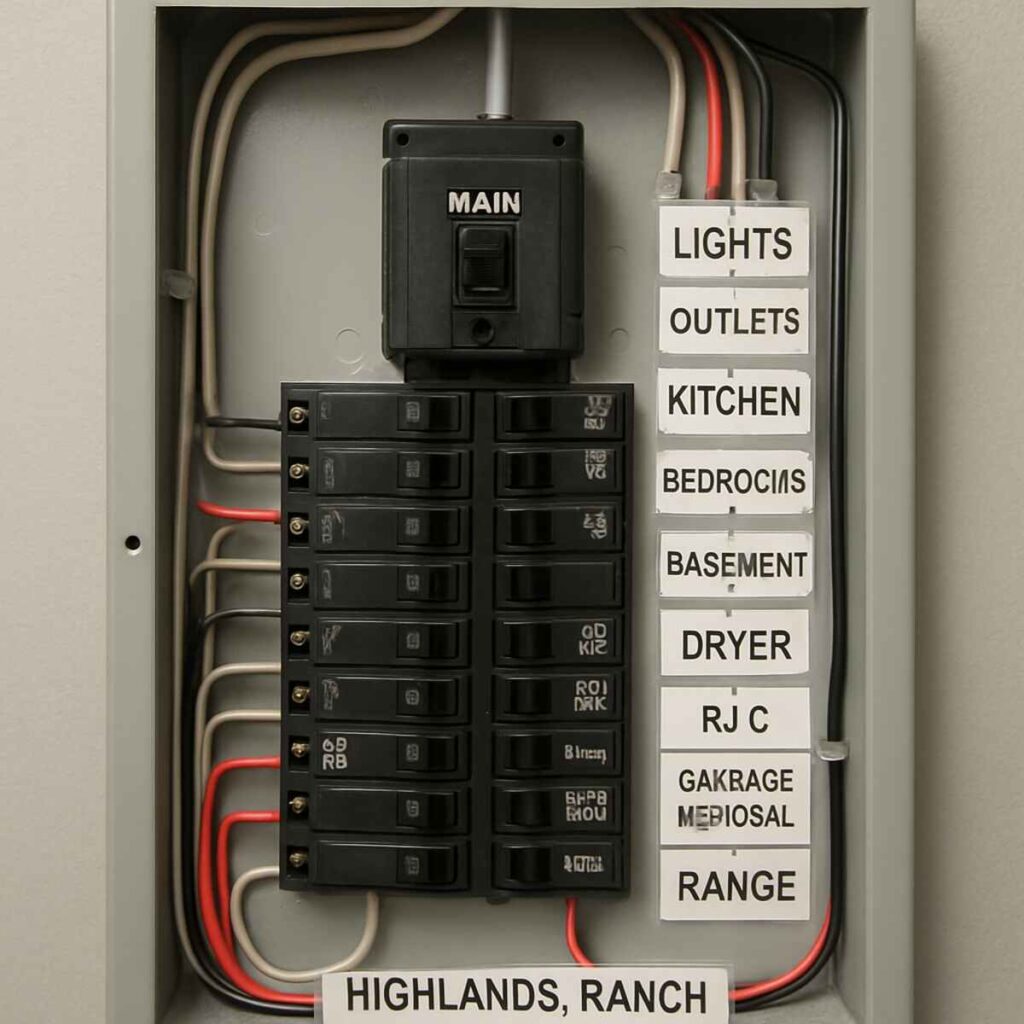
As a homeowner, your property is likely your most significant investment and your primary sanctuary. We spend endless hours thinking about kitchen remodels, landscaping, and paint colors, but we rarely give a second thought to the grey metal box hiding in the basement, garage, or utility room. However, your electrical panel is the beating heart of your home’s infrastructure. Without it, the modern conveniences we rely on daily would cease to exist. The best guide to finding electrician Highlands Ranch CO.
If you are considering an electrical panel upgrade Highlands Ranch, you are already on the right path toward modernizing your home. Many neighborhoods in Highlands Ranch and the broader Douglas County area were constructed during the 1980s, 1990s, and early 2000s. While these homes are beautiful and well-built, the electrical demands of a modern family have skyrocketed since they were first constructed. Today, we have high-definition home theaters, home offices running multiple computers, electric vehicles in the garage, and high-efficiency electric heat pumps.
When it comes to upgrading this vital piece of infrastructure, homeowners often find themselves at a crossroads: should they attempt a Do-It-Yourself (DIY) project to save money, or should they hire a licensed professional? In this comprehensive, deep-dive guide, we will explore every facet of this debate. We will cover the complexities, the costs, the legalities, and the incredible technological advancements in the electrical industry today.
By the end of this guide, you will have a complete understanding of why a professional electrical panel upgrade is not just a regulatory requirement, but a crucial step in protecting your family, future-proofing your property, and enhancing your home’s overall value.
1. Understanding Your Home’s Electrical System
Before diving into the debate between DIY and professional installations, it is essential to understand exactly what an electrical panel does. Your main breaker box is the distribution point for all the electricity entering your home.
Power comes from the utility grid, passes through your electrical meter, and enters the main service panel. From there, it is divided into individual branch circuits that feed your lighting, outlets, and heavy appliances.
The Evolution of Residential Power
Historically, homes required very little electricity. A home built in the 1950s might have been perfectly fine with a 60-amp electrical service. By the 1970s and 1980s, 100-amp service became the standard. Today, however, a 200-amp panel is considered the minimum standard for new construction and modernized homes.
When discussing older homes, we often run into the debate of fuse box vs circuit breaker panel safety.
- Fuse Boxes: Older fuse boxes use small screw-in fuses containing a filament that melts (or “blows”) when overloaded. While fuses react quickly to overloads, the systems themselves are drastically outdated. They lack the capacity for modern homes, and desperate homeowners in the past would often place a penny behind a blown fuse to restore power—a massive fire hazard.
- Circuit Breakers: Modern circuit breakers contain internal mechanisms that trip when they detect an overload or a short circuit. They can easily be reset, provide vastly more capacity, and offer advanced safety features that fuses simply cannot match. If your home still has a fuse box, upgrading is an immediate necessity for both safety and home insurability.
The Role of the Main Breaker
Inside your modern panel, there is a large main breaker (usually located at the very top or bottom). This breaker dictates the total capacity of your home. If you have a 100-amp main breaker, you cannot draw more than 100 amps of total simultaneous current without shutting down power to the entire house. The individual branch breakers below it protect specific circuits, ensuring that the wires in your walls do not overheat and start a fire.
2. Is Your Electrical System Crying Out for Help?
Your electrical system rarely fails without warning. It will usually give you subtle (and sometimes not-so-subtle) hints that it is struggling to keep up with your lifestyle. Ignoring these signs can lead to catastrophic failures, property damage, or worse.
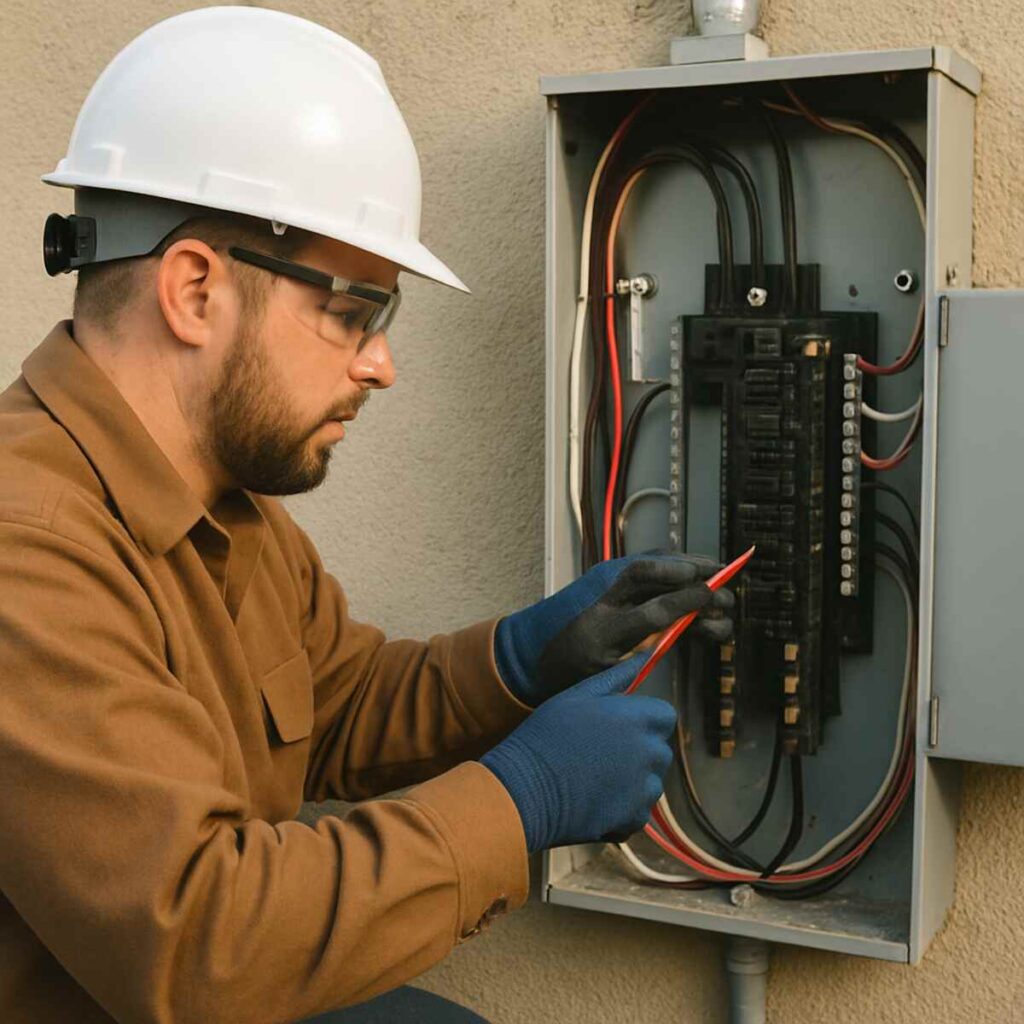
Recognizing the Signs Your Breaker Box is Overloaded
How do you know if you are pushing your electrical system to its absolute limits? Keep an eye out for these critical signs your breaker box is overloaded:
- Frequent Breaker Tripping: A circuit breaker’s job is to trip when it senses an overload. If you find yourself constantly walking to the basement to reset a breaker—especially when you run the microwave and the toaster at the same time—your panel is crying out for capacity.
- Dimming or Flickering Lights: If your living room lights dim noticeably when the air conditioning compressor kicks on or when you start the vacuum cleaner, this indicates a significant voltage drop. Your panel is struggling to distribute the necessary amperage.
- Buzzing or Humming Noises: A properly functioning electrical panel should be completely silent. If you hear a buzzing, humming, or crackling sound coming from the breaker box, it indicates that a breaker is failing to trip or that there is loose, arcing wiring. This is a severe fire hazard.
- Warm or Scorched Breakers: Place the back of your hand against the metal cover of your panel. It should be room temperature. If it is warm to the touch, or if you see black, scorched marks around individual breakers, you have a critical overheating issue that requires immediate attention.
- Use of Multiple Extension Cords: While not a sign from the panel itself, if your home is a web of extension cords and power strips, it means you lack the necessary branch circuits and overall capacity to power your devices safely.
The Hidden Danger: Federal Pacific and Zinsco Panels
If your Highlands Ranch home was built between the 1960s and the late 1980s, you must check the manufacturer of your electrical panel. Upgrading outdated Federal Pacific or Zinsco panels is not an option; it is an urgent necessity.
- Federal Pacific Electric (FPE) Stab-Lok Panels: These panels were installed in millions of homes. Decades later, investigations revealed a horrifying flaw: the breakers often fail to trip during an overload or short circuit. Instead of shutting off the power to prevent a fire, an FPE breaker will allow the wires to melt and catch fire. The company was found to have committed testing fraud. Today, finding an FPE panel in your home means you will likely struggle to secure homeowners insurance until it is replaced.
- Zinsco Panels: Similar to FPE, Zinsco panels have major design flaws. The internal aluminum bus bars corrode easily, and the breakers often melt directly to the bus bar. Once melted, they can no longer trip.
If you open your panel door and see “Federal Pacific,” “Stab-Lok,” or “Zinsco” (sometimes branded as GTE-Sylvania), you need to schedule a replacement immediately.
The Need for Residential Electrical Capacity for Modern Appliances
Even if your panel is safe and relatively modern, you may simply lack the residential electrical capacity for modern appliances. We are in the midst of an electrification movement. Homeowners are moving away from gas appliances and adopting cleaner, more efficient electrical alternatives.
Consider the power requirements of these modern upgrades:
- Induction Cooktops: Require a dedicated 40 to 50-amp circuit.
- Electric Heat Pumps: Require dedicated 30 to 50-amp circuits depending on the size.
- Electric Tankless Water Heaters: Can require up to three dedicated 40-amp circuits.
- Hot Tubs and Spas: Require a dedicated 50 to 60-amp GFCI circuit.
If you have a 100-amp or even a 150-amp panel, adding just one or two of these modern appliances will easily exceed your total available capacity.
3. The Great Debate: DIY vs. Professional Panel Upgrades
With the wealth of information available on YouTube and home improvement blogs, many ambitious homeowners wonder if they can tackle an electrical panel installation themselves. After all, DIYing a tile backsplash or painting a bedroom can save thousands of dollars. Why not apply that same logic to electrical work?
The short answer: Absolutely not.
Replacing an electrical panel is not a weekend DIY project. It is one of the most dangerous, complex, and highly regulated home improvement tasks in existence. Let’s break down exactly why you should always leave this to a licensed professional.
The Illusion of the DIY Savings
The primary motivation for DIY projects is cost savings. A homeowner might look at the price of a new electrical panel and a handful of breakers at a local big-box hardware store (totaling maybe $300 to $500) and compare it to a professional quote of several thousand dollars.
However, this calculation ignores several hidden costs:
- Specialized Tools: Professional electricians use expensive, specialized tools for cutting, stripping, and torquing heavy-gauge wire safely. Buying these tools for a one-time job eats into your savings.
- Code Books and Knowledge: The National Electrical Code (NEC) is an incredibly dense, complex document that is updated every three years. Knowing exactly which codes apply to your specific installation takes years of study.
- Time and Frustration: What takes a professional crew eight hours might take an amateur a week—a week during which your home has absolutely no power, no heating, no cooling, and no working refrigerators.
Understanding the Lethal Risks
The most critical reason to avoid DIY electrical panel work is the sheer danger involved.
- Electrocution: The service entry wires coming from the street into your meter and down into your panel carry massive amounts of unrestricted current. Unlike the wires in your wall, these main lines do not have a breaker ahead of them to trip if you touch them. If you make a mistake, the utility transformer will continue to pump thousands of amps through your body. It is instantly lethal.
- Arc Flash: An arc flash is a localized electrical explosion caused by a short circuit. If you accidentally bridge the two main bus bars with a screwdriver, the resulting explosion can reach temperatures hotter than the surface of the sun. It will cause severe burns, blindness, and deafness.
- Fire Hazards: Electrical fires are usually caused by poor connections. If you fail to strip a wire correctly, use the wrong type of anti-oxidant paste on aluminum wire, or fail to tighten a lug to the exact manufacturer-specified torque, the connection will heat up over time. Weeks or months after your DIY project, that loose connection could start a fire inside your walls while your family is sleeping.
Insurance and Liability Realities
Homeowners insurance policies are strictly written to cover accidental damage. If you perform illegal, unpermitted electrical work on your home, and that work causes a fire, your insurance company has full grounds to deny your claim.
You could lose your entire home and be left with a massive mortgage and no payout, simply because you tried to save a few dollars on labor. Furthermore, if your faulty electrical work injures someone else, you could face immense personal liability.
The Professional Advantage
Hiring a professional provides absolute peace of mind. A licensed electrician brings:
- Deep Expertise: They understand phase balancing, load calculations, proper grounding, and bonding—concepts that are foreign to the average DIYer.
- Speed and Efficiency: A pro crew will arrive in the morning, coordinate with the utility company to cut power, swap the panel, and have your lights back on by dinner time.
- Warranty and Guarantees: Reputable electrical contractors stand by their work. If a breaker fails prematurely or a connection comes loose, they will return to fix it at no cost.
- Liability Insurance: If something goes wrong during the installation, the contractor’s insurance covers the damages, not yours.
4. Navigating the Financials: What Does an Upgrade Cost?
If you have accepted that professional installation is the only way to go, your next question is naturally about the budget. Let’s dive into the specifics of the 200 amp service upgrade cost Douglas County residents can expect.
The Breakdown of Costs
In the Highlands Ranch and greater Denver metro area, the cost to upgrade a residential service panel to 200 amps typically ranges between $2,500 and $4,500.
Why is there a $2,000 variance? The final price depends on several distinct variables:
- The Panel and Breakers ($500 – $1,200): The physical hardware itself varies in price. Standard panels from reputable brands like Square D, Siemens, or Eaton are relatively affordable. However, modern electrical codes require specialized breakers (which we will discuss later), and these can cost $50 to $70 each, driving up the material costs significantly.
- Overhead vs. Underground Feed ($500 – $2,500+): How does power get from the street to your house?
- If you have overhead lines, the electrician will likely need to install a new, thicker weatherhead and mast pipe on your roof to accommodate the larger wires required for 200 amps.
- If your power is fed underground (common in many Highlands Ranch subdivisions), the existing underground conduit might be too narrow to pull new, thicker wires through. This could require excavation and trenching in your yard, which adds significant cost.
- Meter Relocation ($500 – $1,500): Sometimes, your existing meter and panel location no longer comply with current utility company regulations or fire codes. Moving the entire service to a different side of the house requires extensive rewiring.
- Labor ($1,000 – $2,000): You are paying for the expertise of a Master or Journeyman electrician, usually accompanied by an apprentice, for a full day of physically demanding and highly technical work.
- Permitting Fees ($100 – $300): Municipalities charge fees to process the permits and send an inspector to verify the work.
Framing the Cost as an Investment
While spending thousands of dollars on a metal box might not seem as exciting as buying new granite countertops, it is vital to view this as a long-term investment. An upgraded panel protects your electronics from damage, prevents catastrophic fires, allows you to transition to money-saving electric appliances, and is a major selling point if you ever put your home on the market.
5. Playing by the Rules: Permits, Codes, and Regulations
Electrical work is strictly governed by local and national laws. You cannot simply pull an old panel off the wall and slap a new one on. Understanding the legal framework is crucial for a successful project.
Obtaining Electrical Permits in Highlands Ranch Colorado
Highlands Ranch is an unincorporated community in Douglas County, meaning you fall under the jurisdiction of the Douglas County Building Division. Obtaining electrical permits in Highlands Ranch Colorado is mandatory for a panel upgrade.
Why are permits necessary?
- Safety Verification: A permit ensures that a third-party, unbiased municipal inspector will review the electrician’s work. They serve as a second set of eyes to catch any mistakes before they become dangerous.
- Legal Record: A closed permit proves that the work was done legally and up to code. This is vital for insurance purposes and future real estate transactions.
If a contractor tells you they can do the job cheaper if you “skip the permit,” run the other way. This is a massive red flag indicating that they are either unlicensed or plan to do subpar work that would fail an inspection.
Licensed Electrician Requirements for Douglas County Inspections
In Colorado, electrical contracting is highly regulated. To pull a permit for a major service upgrade, the individual or company must meet specific licensed electrician requirements for Douglas County inspections.
The contractor must hold an active Electrical Contractor license with the State of Colorado. Furthermore, the individual overseeing the work must be a Master Electrician or a licensed Journeyman. Homeowners are technically allowed to pull “homeowner permits” to do their own electrical work in Colorado, but as we’ve exhaustively covered, attempting a panel upgrade as a DIYer is a recipe for disaster.
National Electrical Code Compliance for Colorado Homes
The state of Colorado regularly adopts the newest versions of the National Electrical Code (NEC). Ensuring National Electrical Code compliance for Colorado homes means your new panel must meet strict modern standards that your old panel did not.
For example, modern NEC updates require:
- Specific grounding and bonding techniques (often requiring driving two new 8-foot grounding rods into the earth outside your home).
- Dedicated circuits for specific appliances.
- Advanced breaker types for fire and shock prevention.
- Emergency disconnects located on the exterior of the home (a recent code addition so firefighters can cut power to a burning home without having to go inside).
A licensed professional will navigate these complex codes effortlessly, ensuring your home passes inspection on the first try.
6. The Upgrade Process: What to Expect
If you hire a professional for your electrical panel upgrade Highlands Ranch, what exactly happens on the day of the installation? Many homeowners are nervous about the disruption to their daily lives. Understanding the process can alleviate this anxiety.
Here is the step by step residential service entrance upgrade process:
Step 1: Planning and Utility Coordination
Long before tools touch the wall, your electrician will calculate your home’s load requirements, secure the Douglas County permits, and contact your utility provider (usually Xcel Energy or CORE Electric Cooperative in the Highlands Ranch area). They will schedule a “disconnect/reconnect” appointment.
Step 2: Power Shutdown
On the morning of the upgrade, the utility company or your electrician (if authorized) will pull the electrical meter from the socket outside your home. This completely cuts the power to your house. You will be without electricity, Wi-Fi, heating, or cooling for the duration of the project. Plan accordingly!
Step 3: Demolition and Removal
The electrician will carefully disconnect every single branch circuit wire from the old breakers, labeling them meticulously. They will then remove the old, heavy metal panel from the wall.
Step 4: Installing the New Infrastructure
The new panel “can” (the empty metal box) is mounted securely to the wall. If your home requires a new meter housing or exterior emergency disconnect, those are installed simultaneously. New, thicker main service wires are pulled from the meter into the new panel.
Step 5: Wiring and Grounding
The electrician will install the new main breaker and branch breakers. They will meticulously strip, insert, and torque every individual wire into its respective breaker. They will also update the grounding system, which often involves running thick copper wire to your home’s water main and out to new grounding rods driven into the yard.
Step 6: Power Restoration and Testing
Once everything is wired and visually checked, the meter is reinstalled, and power is restored from the grid. The electrician will turn on the main breaker, then flip on each individual branch breaker one by one, testing the voltage and ensuring there are no immediate faults.
Step 7: The Final Inspection
A few days or weeks later, the Douglas County electrical inspector will arrive to review the work. Once they sign off, the permit is closed, and your project is officially complete.
How Long Does a Main Service Panel Replacement Take?
A common question is: how long does a main service panel replacement take?
For a standard residential upgrade (e.g., swapping a 100-amp panel for a 200-amp panel in the exact same location), a professional crew will typically complete the physical work in 8 to 10 hours. They will usually arrive around 8:00 AM, and you should have power restored by 4:00 PM or 5:00 PM.
If the job requires significant trenching, moving the panel to a different room, or extensive drywall repair, the project can stretch into two days. However, electricians will always ensure you have a safe, temporary power setup before leaving for the night.
7. Future-Proofing: Preparing for Tomorrow’s Technology
One of the most exciting reasons to invest in a panel upgrade is the ability to integrate cutting-edge technology into your home. The world is changing rapidly, and your electrical system needs to keep up.
Capacity for Level 2 Electric Vehicle Charger Installation
Electric vehicle (EV) adoption in Colorado is booming. Whether you drive a Tesla, a Rivian, or a Ford Mustang Mach-E, you quickly realize that plugging an EV into a standard 120-volt wall outlet is painfully slow, often yielding only 3 to 5 miles of range per hour of charging.
To experience the true convenience of EV ownership, you need a Level 2 charger. However, this requires significant power. Most homeowners want a 40-amp to 60-amp dedicated 240-volt circuit to achieve 20 to 40 miles of range per hour.
Because EV charging is considered a “continuous load” (meaning it draws maximum power for more than three hours), the National Electrical Code requires that the circuit be upsized by 125%. Therefore, a 48-amp charger requires a 60-amp breaker. An older 100-amp panel physically cannot support this without severe risk of overloading. Upgrading to 200 amps guarantees you have the capacity for level 2 electric vehicle charger installation, ensuring your car is fully charged every morning.
The Rise of the Smart Home: Benefits of Smart Electrical Panels
If you are upgrading, you are no longer limited to the “dumb” metal boxes of the past. Today, companies like Span and Leviton are revolutionizing the industry with smart panels.
What are the benefits of smart electrical panels vs traditional boxes?
- Granular Energy Monitoring: A smart panel connects to your home’s Wi-Fi. Through a smartphone app, you can see exactly how much power every single circuit in your home is using in real-time. You can finally discover if your vintage basement refrigerator is costing you $50 a month in phantom energy drain.
- Remote Control: Did you forget to turn off the oven or the curling iron before leaving for the airport? With a smart panel, you can open an app and remotely turn off that specific circuit breaker from anywhere in the world.
- Solar and Battery Integration: If you plan to install solar panels or a home battery system (like a Tesla Powerwall), smart panels are game-changers. During a grid power outage, a smart panel allows you to dynamically manage your battery backup. Instead of draining your battery quickly, you can use the app to turn off power-hungry circuits (like the AC or hot tub) and prioritize essential circuits (like the fridge, Wi-Fi, and medical devices), extending your battery life from hours to days.
- Load Shedding for Panel Limits: Smart panels can actually pause charging your EV if they detect that your HVAC and oven are running, preventing the main breaker from tripping. This intelligent load management can sometimes allow you to install heavy appliances without needing expensive utility line upgrades.
While smart panels command a premium price (often $3,000+ just for the hardware), they offer unparalleled control and insight into your home’s energy footprint.
8. Enhancing Safety and Security
A panel upgrade isn’t just about getting more power; it’s about getting safer power. Modern electrical codes require the installation of advanced protective devices that simply did not exist a few decades ago.
Preventing Home Electrical Fires with AFCI Breakers
You are likely familiar with GFCI (Ground Fault Circuit Interrupter) outlets—the ones with the little reset buttons found in kitchens and bathrooms. GFCIs protect humans from fatal electric shocks where water is present.
However, modern codes heavily focus on another device: the AFCI.
Preventing home electrical fires with AFCI breakers (Arc Fault Circuit Interrupters) is a massive leap forward in home safety. An “arc fault” occurs when electricity jumps across a gap, usually due to a damaged wire, a loose connection, or a nail driven through a wall into a wire. This arcing generates intense heat and is the leading cause of electrical fires. Standard breakers cannot detect arc faults; they only trip during massive overloads.
AFCI breakers contain tiny computers that constantly monitor the electrical waveform. If they detect the unique electrical signature of a dangerous arc, they trip the circuit in a fraction of a second, neutralizing the fire hazard before a spark can catch wood or insulation on fire. During a modern panel upgrade, almost all living spaces (bedrooms, living rooms, hallways) will be legally required to be updated to AFCI protection.
Whole House Surge Protection Integration
We live in a world filled with sensitive, expensive microelectronics. Our TVs, computers, smart appliances, and even LED light bulbs contain fragile circuit boards.
Most homeowners buy cheap plastic power strips to protect their TVs, but these offer very little real protection. Furthermore, they do nothing to protect hardwired appliances like your refrigerator, HVAC system, or washing machine.
Modern NEC codes now require whole house surge protection integration during new panel installations. A whole-house surge protector is a device wired directly into your new breaker box.
How does it work?
- External Threats: If lightning strikes near your home, or if the utility company sends a massive spike of voltage down the lines, the surge protector detects the overvoltage instantly.
- The Diversion: It acts like a pressure relief valve, taking that massive spike of electricity and dumping it safely into the earth through your home’s grounding system, before it can enter your branch circuits and fry your electronics.
- Internal Micro-surges: It also protects against small internal surges caused by the heavy motors in your AC or refrigerator turning on and off, which can slowly degrade the lifespan of your electronics over time.
For a few hundred dollars added to your panel upgrade, you can insure tens of thousands of dollars worth of modern electronics against catastrophic electrical failure.
9. The Long-Term Return on Investment
Upgrading your electrical panel requires a significant upfront financial commitment. However, it is essential to view this not just as a maintenance expense, but as a strategic home improvement that pays dividends.
Increased Home Resale Value Through Electrical System Updates
The real estate market in Colorado is highly competitive, and today’s buyers are incredibly savvy. When buyers walk through a potential home, they look beyond the fresh paint and staging furniture. Home inspectors will brutally scrutinize the mechanical and electrical systems.
If an inspector finds an old 100-amp panel, a dangerous Federal Pacific box, or a system bursting with double-tapped breakers (where two wires are shoved into a breaker designed for one), it will absolutely end up on the inspection objection list. Buyers will demand that you either fix it before closing or offer a massive concession on the asking price. In some cases, a dangerous panel will cause the buyer’s financing or insurance to fall through entirely, killing the deal.
Conversely, achieving increased home resale value through electrical system updates is highly documented. A brand new 200-amp panel featuring modern AFCI breakers, surge protection, and a dedicated EV charging circuit is a massive selling point. Real estate listings that highlight “Upgraded 200-Amp Electrical Panel” and “EV Charger Ready” attract premium buyers who want a move-in ready, future-proofed home.
By taking care of this upgrade now, you get to enjoy the safety and capacity benefits immediately, while knowing that you will recoup a significant portion of the cost when it is time to sell.
Peace of Mind: The Ultimate ROI
While the financial return is excellent, the most significant return on your investment cannot be measured in dollars.
As we have discussed, an old, overloaded, or defective electrical panel is a ticking time bomb. The risk of electrical fires, damaged appliances, and electrocution is real. By hiring a licensed professional for your electrical panel upgrade Highlands Ranch, you are buying the ultimate peace of mind.
You can sleep soundly at night knowing that your home is protected by state-of-the-art AFCI technology. You can plug in your space heater, run the microwave, and charge your electric vehicle simultaneously without fear of plunging your home into darkness. You know that the work was done to the highest possible standard, inspected by local Douglas County authorities, and is fully compliant with the rigorous National Electrical Code.
Conclusion: Making the Right Choice for Your Home
Your electrical panel is the unsung hero of your daily life. It quietly and tirelessly distributes the energy that powers your work, your entertainment, your comfort, and your safety.
When it begins to show signs of age—whether through flickering lights, tripping breakers, or simply lacking the capacity to support your new electric vehicle—it is time to act. As we have thoroughly explored, this is one arena where the DIY spirit must be put aside. The lethal risks of electrocution and arc flash, the complexities of municipal permitting, the labyrinth of modern code compliance, and the severe insurance liabilities make DIY electrical panel work a disastrously poor choice.
Instead, trust the professionals. A licensed, insured, and experienced electrician brings the tools, knowledge, and efficiency required to transform your home’s electrical infrastructure safely.
If you are a resident in the area, investing in a professional electrical panel upgrade Highlands Ranch is investing in the foundation of your home. It paves the way for a safer, smarter, and greener future, ensuring that your home remains a sanctuary of comfort and reliability for decades to come. Don’t wait for a failure in the dark; take control of your home’s power today.