


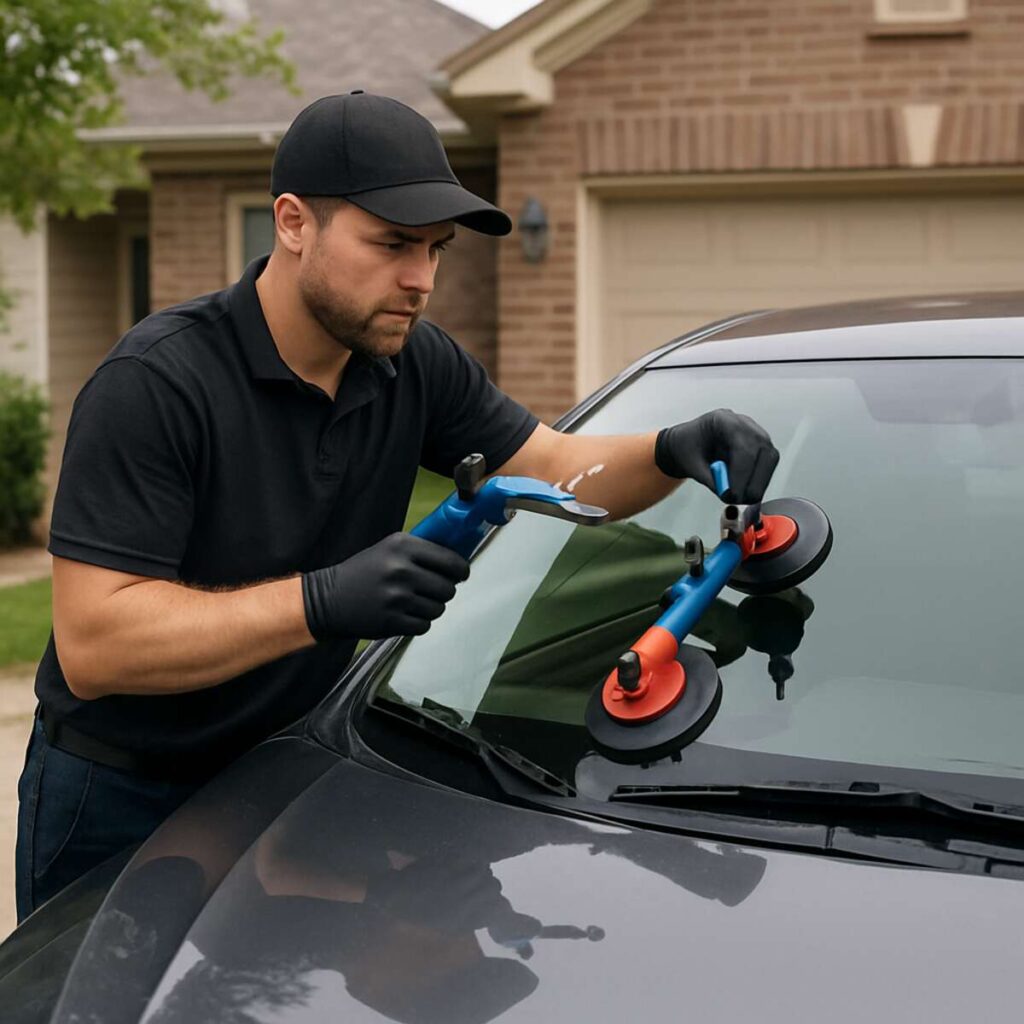
Few driving experiences are as universally frustrating as the sudden, sharp smack of a rock hitting your windshield at highway speeds. In a fraction of a second, your pristine view of the road is marred by a distraction that is not only unsightly but potentially dangerous. For decades, dealing with a damaged windshield meant taking time off work, driving to a repair shop, and sitting in a waiting room for hours. Today, the landscape of vehicle maintenance has evolved dramatically. The best guide to finding mobile glass repair.
With the rise of mobile glass repair, professional technicians bring the shop directly to your driveway or workplace. This comprehensive guide will explore everything you need to know about cost-effective solutions for your vehicle’s glass, from the underlying science of modern windshields to the intricacies of insurance claims and advanced safety system recalibrations. Whether you are dealing with a minor chip or a completely shattered window, understanding your options will save you time, money, and stress.
1. The Science Behind Your Vehicle’s Glass
Before diving into repair methods and costs, it is crucial to understand that not all glass on your vehicle is created equal. The windows in your car are highly engineered safety components designed to protect you in the event of an accident.
Tempered Glass vs Laminated Glass
When discussing auto glass, the primary distinction comes down to tempered glass vs laminated glass. Each serves a specific purpose, behaves differently under stress, and requires entirely different approaches when damaged.
Tempered Glass: Typically found on the side and rear windows of your vehicle, tempered glass is manufactured through an extreme heating and rapid cooling process. This tempering creates severe tension on the inside of the glass and high compression on the outside, making it roughly four to five times stronger than standard glass of the same thickness. However, when tempered glass breaks, it is designed to shatter instantly into thousands of small, blunt, pebble-like pieces. This prevents jagged shards from acting as guillotines during a crash. Because of this shattering characteristic, tempered glass cannot be repaired; it must always be replaced.
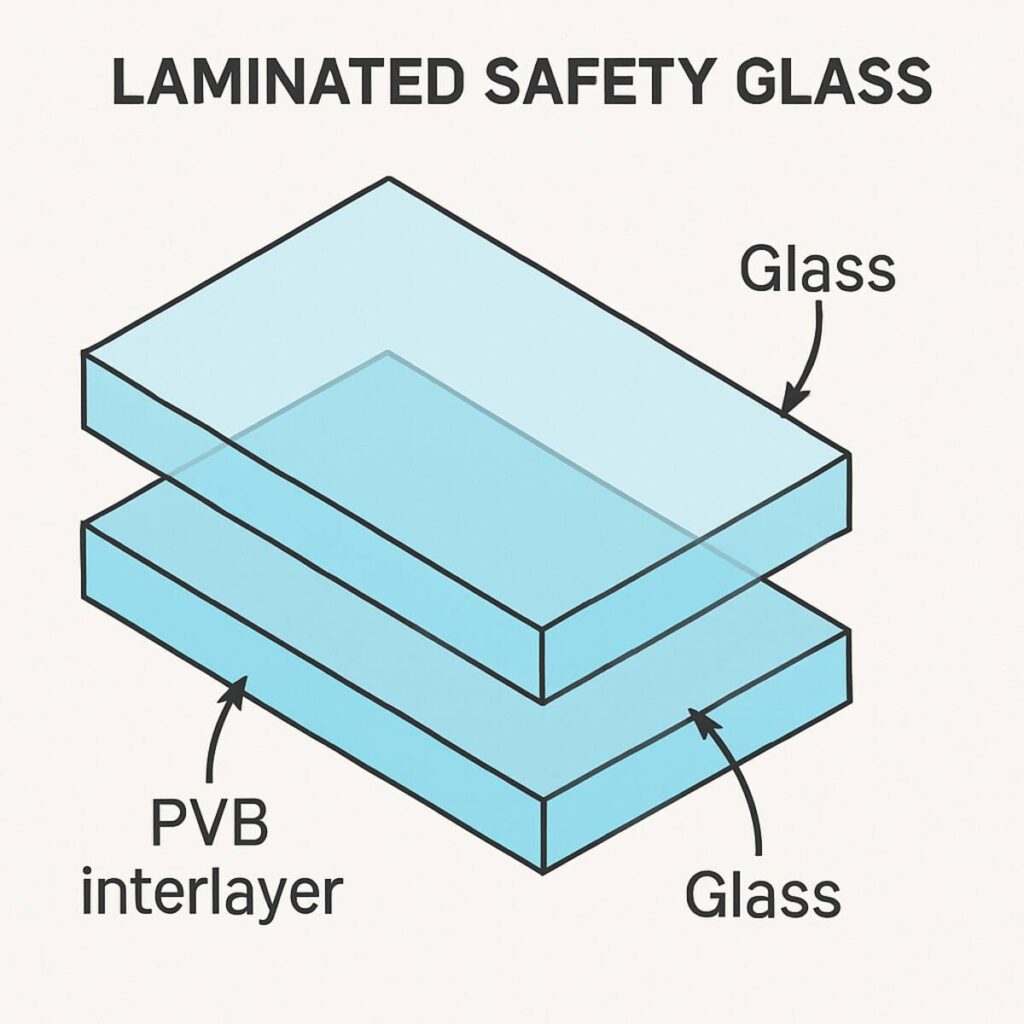
Laminated Glass: Your windshield is almost universally made of laminated glass. This consists of two layers of curved glass bonded together by a resilient, transparent inner layer of Polyvinyl Butyral (PVB). This complex structure is what allows for windshield repairs. When a rock strikes laminated glass, it usually only chips or cracks the outer layer, leaving the PVB layer and the inner layer of glass intact.
Understanding Laminated Safety Glass Properties
The invention of laminated glass was a monumental leap forward in automotive safety. The laminated safety glass properties extend far beyond simply keeping the wind out of your face
2. Assessing the Damage: To Repair or Replace?
When damage occurs, the immediate question every driver asks is: can a chipped windshield be repaired, or will it require a full replacement? The answer depends on four main factors: size, depth, location, and the amount of time the damage has been left unattended.
The “Dollar Bill” Rule and Beyond
As a general industry standard, if a crack can be covered by a dollar bill (roughly six inches in length), it is likely a candidate for repair. However, this is just a starting point. Let’s look closer at the criteria for auto glass repair:
- Size: Most chips smaller than a quarter and cracks shorter than three to six inches can be safely repaired.
- Depth: The damage cannot penetrate both layers of the laminated glass. If the rock has punched a hole entirely through to the cabin, the windshield is compromised and must be replaced.
- Location: This is often the most critical factor.
- The Driver’s Line of Sight: If the chip is directly in the driver’s line of vision, most reputable technicians will refuse to repair it. Even the best repairs can leave a slight distortion or haze, which can cause dangerous glare from oncoming headlights at night.
- The Edge of the Windshield: Cracks that extend to the edge of the windshield compromise the structural integrity of the glass and generally necessitate a full replacement.
- Sensors and Cameras: Damage located in front of Advanced Driver Assistance Systems (ADAS) cameras cannot be repaired, as the distortion will blind the vehicle’s safety features.
Types of Windshield Damage
Identifying the type of chip or crack you have will help you communicate effectively when you call for an emergency auto glass service.
- Bullseye: A circular break with a distinct cone in the outer layer of glass. These are highly repairable.
- Star Break: A series of short cracks radiating outward from the point of impact.
- Half Moon: Similar to a bullseye but not completely circular.
- Combination Break: A mix of a bullseye and a star break.
- Spider Web: Often caused by larger impacts. Fixing spider web glass cracks is notoriously difficult. If the “web” is larger than a few inches, a repair is usually impossible because the structural integrity of the glass is lost.
Repairing vs Replacing Cracked Windshield
The debate of repairing vs replacing cracked windshield is essentially a question of safety, cost, and time.
Why choose repair?
- Cost-Effective: Repairs are significantly cheaper than replacements.
- Time-Saving: A professional repair takes about 30 minutes, whereas a replacement can take hours.
- Eco-Friendly: Windshield glass is difficult to recycle due to the PVB layer. Repairing keeps original glass out of landfills.
- Preserves the Original Seal: Your car left the factory with a perfect robotic seal around the windshield. A repair allows you to keep that original factory seal intact, eliminating the risk of water leaks or wind noise that can occasionally occur after a replacement.
Why choose replacement?
- Safety First: If a crack is too large, the windshield cannot adequately support the roof in a rollover or back up the airbag.
- Clarity: Extensive damage simply cannot be hidden. Replacement restores 100% optical clarity.
- Irreparable Damage: Deep cracks, edge cracks, and shattered tempered glass leave replacement as the only option.
3. Immediate Action: Halting the Damage
You are driving on the highway, and the dreaded rock hits. You cannot get it fixed today. What do you do? Understanding the methods for preventing windshield crack from spreading is vital to saving your windshield from a full replacement.
Windshield glass expands and contracts with temperature changes. A tiny chip is a weak point in the glass. When the glass flexes, the stress concentrates at that weak point, causing it to shoot out into a long crack.
Actionable Tips to Prevent Cracks from Spreading
- Use Clear Packing Tape (Temporary Fix): The moment you get a chip, pull over safely and place a small piece of clear packing tape over the impact point. Do not use super glue. The tape prevents dirt, water, and windshield washer fluid from entering the chip. If debris gets inside the micro-cracks, it will be impossible to achieve a clean, invisible repair later.
- Avoid Extreme Temperature Changes: This is the most common reason chips turn into massive cracks.
- In Summer: Do not blast your AC directly onto a hot windshield. Park in the shade whenever possible to keep the glass cool. Do not wash your car with cold water after it has been sitting in the hot sun.
- In Winter: Do not use boiling water to melt ice off your windshield (this will shatter it instantly). Avoid blasting your defroster on the highest heat setting right away. Let the car warm up gradually.
- Drive Carefully: Avoid potholes, speed bumps, and rough dirt roads. The physical vibration and torsion of the car’s chassis can cause the chip to spread.
- Avoid Slamming Doors: The sudden increase in cabin air pressure when slamming a car door can push against the glass from the inside, causing a crack to run. Leave a window cracked open slightly when closing doors until you get the chip fixed.
4. The Magic of Repair: How It Actually Works
When a technician arrives to fix a chip, the process they use is a marvel of modern chemistry and physics. The core of the repair lies in the windshield resin injection process.
Professional Windshield Resin Injection Process
When you hire a professional for mobile glass repair, they bring specialized tools that are vastly superior to over-the-counter kits. Here is how the professional process unfolds:
- Cleaning and Preparation: The technician carefully cleans the impact area, removing loose glass shards with a scribe or drill. Moisture is the enemy of windshield resin, so the technician may use a heat source to evaporate any water trapped inside the micro-cracks.
- Creating a Vacuum: A specialized bridge apparatus is mounted over the chip using suction cups. An injector is positioned exactly over the impact point. The technician uses the injector to pull a vacuum, sucking all the trapped air out of the chip and cracks. If air is left inside, the repair will look cloudy and fail to bond correctly.
- Resin Injection: Once the air is removed, a highly specialized, optically matched acrylic resin is forced into the void under pressure. The technician cycles between vacuum and pressure to ensure the resin reaches the very tips of the microscopic cracks.
- Curing: The resin is anaerobic and UV-cured. The technician places a thin curing tab (a piece of transparent film) over the resin to cut off oxygen, then applies a high-intensity ultraviolet light over the area for a few minutes. This UV light hardens the liquid resin into a solid mass that mimics the physical and optical properties of glass.
- Scraping and Polishing: Once cured, the excess resin on the surface is scraped away flush with the glass using a razor blade. The technician then applies a specialized pit polish to restore the smooth, reflective surface of the windshield.
The result is not a “new” windshield, but a stabilized one. The visual improvement is usually between 80% and 95%, leaving a small blemish that looks like a dried water spot or a tiny bug smash. More importantly, the structural integrity of the glass is restored.
DIY vs. Professional Repair
With the internet full of tutorials, many drivers wonder if they should attempt the repair themselves. Let’s break down the realities of doing it yourself.DIY Glass Chip Repair Kit Instructions
You can purchase DIY repair kits at most auto parts stores for around $15 to $25. While they lack the professional-grade vacuum tools and high-quality resins of the pros, they can work for very simple, minor bullseye chips if you follow the DIY glass chip repair kit instructions meticulously:
- Prep: Clean the area with an alcohol wipe (no glass cleaner, as it leaves residue). Use a pushpin to clear out loose glass.
- Mount the Pedestal: Peel the backing off the adhesive seal and place it over the chip. Press the plastic pedestal onto the seal.
- Add Resin: Squeeze the recommended number of resin drops (usually 3-5) into the pedestal.
- Insert the Syringe: Attach the provided syringe. Pull the plunger up and lock it into the vacuum position for 10 minutes. This draws the air out.
- Pressurize: Remove the syringe briefly to let air in, then replace it. Push the plunger down to the pressure position and lock it for 20 minutes to force the resin into the crack.
- Cure: Remove the apparatus, wipe away excess, apply a drop of resin directly to the pit, cover with the clear curing film, and park the car in direct sunlight for 15-30 minutes to cure via natural UV rays.
- Finish: Scrape the hardened resin flush with a razor blade.
The Risks of DIY Repair: While cheap, DIY kits have major drawbacks. Natural sunlight is unpredictable, making curing inconsistent. The plastic syringes cannot pull a strong enough vacuum compared to professional metal injectors, often leaving air bubbles trapped in the resin. Furthermore, if you mess up a DIY repair and the resin cures, a professional cannot fix it. The hardened resin blocks the pathways, meaning a failed DIY repair usually results in needing a full, expensive windshield replacement.
For peace of mind, hiring a same-day window restoration service is often the better investment. Professional repairs are frequently covered entirely by insurance (more on this later), meaning the professional route might actually cost you less out-of-pocket than buying a DIY kit.
5. The Mobile Glass Repair Revolution
In the past, getting a windshield fixed was a logistical nightmare. You had to drive an unsafe vehicle to a shop, arrange for a ride back home, or sit in a waiting room drinking stale coffee for three hours. Today, mobile glass repair has fundamentally changed the auto glass industry.
Convenience Meets Quality
Mobile repair services operate customized vans that serve as fully functioning, mobile glass shops. They come directly to your home driveway, your office parking lot, or even the side of the road if you are stranded.
This emergency auto glass service provides several distinct advantages:
- Safety: You do not have to drive a vehicle with severely compromised visibility or structural integrity.
- Time-Saving: You can continue working at your desk or relaxing at home while the technician works outside.
- Same Quality: Mobile technicians use the exact same OEM-quality urethanes, primers, and glass as in-shop technicians. They have awnings and specialized heaters to control the environment and ensure perfect adhesive curing, even in less-than-ideal weather.
6. The Windshield Replacement Process
When a crack is too long, or a side window is completely shattered, a repair is off the table. You are now looking at a full replacement. This is a highly technical, precise procedure that requires certified professionals to ensure your vehicle remains safe.
OEM vs Aftermarket Auto Glass: Making the Right Choice
One of the most critical decisions during a replacement is choosing the type of glass. You will be faced with the choice of OEM vs aftermarket auto glass. Understanding the difference is vital for your budget and your vehicle’s performance.
OEM (Original Equipment Manufacturer) Glass: This glass is made by the same company that manufactured the original glass for your car (such as Pilkington, PGW, or Sekurit).
- Pros: It is an exact replica of your factory glass. It matches the exact thickness, color tint, durability, and curvature. It will have the automaker’s logo stamped on it. If you have a leased vehicle, your contract likely dictates that you must use OEM glass.
- Cons: It is significantly more expensive.
Aftermarket (OEE – Original Equipment Equivalent) Glass: This glass is manufactured by companies that do not hold the contract with your car manufacturer, but who reverse-engineer the glass to fit your vehicle.
- Pros: It is much more cost-effective. By law, aftermarket glass must meet or exceed the minimum safety standards set by the Department of Transportation (DOT).
- Cons: Because copyright laws prevent aftermarket makers from copying the exact proprietary curvature perfectly, there can sometimes be minor variations. Some drivers report slight wind noise or minor optical distortion at the extreme edges with lower-quality aftermarket glass.
Note on Modern Vehicles: If your car has advanced safety sensors on the windshield, many manufacturers highly recommend—or outright require—OEM glass, as aftermarket glass may not have the precise clarity needed for the cameras to function correctly.
Step-by-Step: How a Windshield is Replaced
Understanding the windshield replacement process highlights why it is not a DIY job:
- Protecting the Vehicle: The technician drapes the hood, steering wheel, and seats to protect the paint and interior from debris and adhesives.
- Removal of Trim and Wipers: The windshield wipers, cowl (the plastic trim below the glass), and side moldings are carefully removed.
- Cutting the Old Urethane: The technician uses specialized oscillating knives, wire-cutting systems, or cold knives to slice through the thick, tough urethane adhesive holding the old glass to the car’s frame (the pinch weld).
- Prepping the Pinch Weld: The old glass is lifted away. The technician trims the old urethane down to a thin, flat layer (about 1-2mm). They meticulously clean the area. If they scratch the paint during removal, they must apply a special primer; otherwise, the bare metal will rust, eventually causing the new windshield to leak or pop out during a crash.
- Applying the Urethane: A thick, continuous bead of high-performance, automotive-grade urethane adhesive is applied to the perimeter of the pinch weld (or directly to the new glass, depending on the technician’s method).
- Setting the Glass: Using specialized suction cups (and sometimes a robotic lifting arm or a partner), the heavy new glass is precisely lowered into the bed of wet urethane. It is gently pressed to ensure a uniform seal.
- Reassembly: The cowl, wipers, and trim are reinstalled.
How Long to Wait After Glass Replacement?
This is a matter of life and death. You cannot immediately drive your car after a replacement. The urethane adhesive requires time to cure and bond the glass to the metal frame.
Your technician will give you a “Safe Drive Away Time” (SDAT). How long to wait after glass replacement depends heavily on the specific brand of urethane used, the temperature, and the humidity.
- Advanced Urethanes: Some modern, fast-curing urethanes allow for an SDAT of just 30 to 60 minutes.
- Standard Urethanes: May require you to wait 2 to 3 hours.
- Curing: While the vehicle may be safe to drive after an hour, the urethane takes 24 to 48 hours to fully cure.
During the first 48 hours after a replacement, you must follow strict rules:
- Do not wash the car (especially high-pressure car washes).
- Leave a window cracked slightly to prevent air pressure from blowing the seal out when you shut the doors.
- Do not remove the retention tape if the technician applied any.
- Avoid driving on excessively bumpy roads.
7. The Complexity of Modern Vehicles: ADAS Systems
If you drive a car built in the last decade, replacing a windshield is no longer just about glass and glue. It involves highly sensitive computer systems.
Advanced Driver Assistance Systems (ADAS) are safety features like Lane Departure Warning, Forward Collision Alert, Adaptive Cruise Control, and Automatic Emergency Braking. The cameras and sensors that run these systems are typically mounted in a bracket attached directly to the inside of the windshield, looking out through the glass.
The Critical Need for ADAS Recalibration After Glass Change
When a windshield is replaced, the camera is disconnected and reattached to the new glass. Even a millimeter of variance in the bracket placement, or a microscopic difference in the pitch of the new glass, will shift the camera’s line of sight.
Think of it like a laser pointer. If you shift the pointer by just one millimeter in your hand, the dot on a wall 100 feet away shifts by several feet. If your lane departure camera is off by a fraction of a degree, your car might think the lane lines are three feet to the left of where they actually are. The car could actively steer you into oncoming traffic while trying to “save” you.
Therefore, ADAS recalibration after glass change is not optional; it is a mandatory safety requirement.
Static vs Dynamic Recalibration
Depending on your vehicle’s make and model, the technician will perform one (or both) of the following recalibration methods:
- Static Recalibration: This requires highly specialized equipment. The car is parked on a perfectly level surface. The technician sets up large target boards featuring specific geometric patterns at exact, manufacturer-specified distances and heights in front of the car. The car’s computer is plugged into a diagnostic tool, and the camera is commanded to “look” at the targets and relearn its center point.
- Dynamic Recalibration: The technician plugs a diagnostic tablet into the vehicle’s OBD-II port and takes the car for a drive. The vehicle must be driven at specific speeds, on well-marked roads, in good weather, for a certain distance until the camera learns the lane lines and calibrates itself.
Because of this necessary technology, a modern windshield replacement is a high-tech procedure, meaning mobile technicians now carry advanced computer diagnostic tools alongside their traditional suction cups and urethane guns.
8. Navigating Costs and Insurance
We have covered the mechanics, the safety, and the technology. Now we must address the most common concern for vehicle owners: the financial aspect.
On-Site Windshield Replacement Cost
What is the actual on-site windshield replacement cost? Because of the sheer number of variables, it is impossible to give a single flat rate, but we can break down the factors that influence the final bill:
- Vehicle Make and Model: A simple windshield for a 2005 Honda Civic will cost significantly less than a complex windshield for a 2023 Range Rover with heated glass, rain sensors, and heads-up display (HUD) compatibility.
- Type of Glass: As discussed, OEM glass commands a premium (often 40% to 60% higher) over aftermarket OEE glass.
- ADAS Recalibration: The labor and specialized equipment required for recalibration add a significant amount to the bill. Recalibration alone can cost between $150 and $450 on top of the glass and installation.
- Location: Labor rates vary by region.
Rough Cost Estimates (Out of Pocket):
- Basic older vehicle (no ADAS, aftermarket glass): $200 – $350
- Modern standard vehicle (requires ADAS recalibration, aftermarket glass): $450 – $800
- Luxury/Highly advanced vehicle (OEM glass, complex ADAS): $900 – $2,500+
- Chip repair: $50 – $150.
Handling an Insurance Claim for Window Damage
Because out-of-pocket costs for modern windshields have skyrocketed due to ADAS technology, utilizing your auto insurance is more important than ever.
Filing an insurance claim for window damage falls under the Comprehensive portion of your auto insurance policy, not your collision coverage. Comprehensive coverage handles damage from acts of nature, vandalism, theft, and falling/flying objects (like rocks on the highway).The Beauty of “Zero Deductible” States
Many drivers hesitate to call their insurance because they assume their $500 deductible will wipe out any benefit. However, several US states—including Florida, Kentucky, South Carolina, and Massachusetts—have enacted laws that require insurance companies to waive the deductible for windshield replacements. If you carry comprehensive coverage in these states, your windshield replacement is essentially 100% free to you.
Even if you do not live in a zero-deductible state, many insurance companies offer a specific “glass buy-back” or “full glass coverage” rider on your policy for just a few dollars a month, which waives the deductible for glass claims.Why Insurance Loves Chip Repairs
If you only have a rock chip, you should absolutely call your insurance. Nearly all major insurance providers will waive your deductible entirely if you choose to repair the windshield rather than replace it.
Why? Because paying a mobile technician $75 to inject resin into a chip today saves the insurance company from paying $1,000 for a full replacement with ADAS recalibration next week when that chip spreads into a massive crack. It is a win-win. You get a free auto glass repair at your home or office, and the insurance company minimizes their payout.
Will a Glass Claim Raise My Rates?
This is a very common fear. Generally speaking, a comprehensive claim for glass damage is considered a “no-fault” claim. A rock flying up from a truck tire is entirely out of your control. Therefore, most insurance companies will not raise your premium for a single glass claim.
However, if you file multiple comprehensive claims in a short period (e.g., three windshields in two years), the insurance algorithm may flag you as a higher risk, which could marginally impact your rates. It is always best to consult your specific agent, but for a standard rock chip or unexpected crack, using your coverage is the smartest financial move.
9. Specialized Situations: Side and Rear Glass
While the windshield gets all the attention, mobile glass services are equally adept at replacing side and rear windows. As discussed in the “tempered glass vs laminated glass” section, side and rear windows almost always utilize tempered glass (though some modern luxury cars use acoustic laminated glass for the side windows to reduce road noise).
Dealing with a Shattered Window
If your car is broken into or involved in a side-impact collision, the tempered glass will shatter into thousands of pieces. When a mobile technician performs an emergency auto glass service for a side window, the process involves extensive cleanup.
- Vacuuming: The technician must remove the interior door panel to vacuum out the glass shards that have fallen down into the door cavity. If left behind, these pieces will rattle annoyingly every time you drive or close the door.
- Clearing the Track: The window regulator track must be perfectly cleared of debris so the new window rolls up and down smoothly.
- Installation: The new tempered glass pane is bolted or clipped into the window regulator, tested for smooth operation, and the door panel is reassembled.
Rear windshields (back glass) are similar but often involve reconnecting the electrical grid that powers the rear window defroster, as well as integrating with the vehicle’s radio antenna, which is often embedded in the rear glass.
10. The Future of Auto Glass
The auto glass industry is not standing still. The windshield of tomorrow will be vastly more complex than the windshield of today.
As we move toward autonomous vehicles, the windshield is transitioning from a simple window into a complex digital display and sensor hub. We are already seeing the proliferation of Heads-Up Displays (HUD), where speed, navigation, and warnings are projected directly onto the PVB interlayer of the laminated glass.
In the near future, we will see wider adoption of electrochromic glass (smart glass), which can tint itself electronically to block glare without needing physical sun visors. Manufacturers like Corning are experimenting with incorporating Gorilla Glass (the same tough glass used on smartphones) into automotive glass to make it lighter, thinner, and vastly more resistant to rock chips.
As this technology advances, the importance of professional, highly trained technicians performing your mobile glass repair and replacement will only increase. The days of simply slapping some glue on a piece of glass are long gone; auto glass replacement is now an advanced technological service.
Conclusion
Your vehicle’s glass is a vital safety system that protects you from the elements, preserves the structural integrity of your car during a crash, and allows the advanced computer systems to monitor the road ahead. Treating a chipped or cracked windshield as an afterthought is a dangerous gamble.
By understanding the differences between tempered and laminated glass, knowing how to stop a crack from spreading, and recognizing when a repair is safe versus when a full replacement is mandatory, you can make informed decisions.
Thanks to the rapid advancement in mobile services, dealing with auto glass damage is no longer the burdensome chore it once was. Whether you need a quick resin injection to save a chipped windshield or a complete on-site replacement with precise ADAS recalibration, professional mobile technicians bring cost-effective, high-tech solutions right to your doorstep. The next time you hear that dreadful smack on the highway, do not panic—help is just a phone call away, ready to come directly to you.